25 January 2023

Exploring the Outback

The Way Outback brewery of Dorset came recommended, and gifted, by my niece who lives down that way. Everyday beers in cans; fancy stuff in bottles: seems eminently sensible.

At the lower of the scale is Working Like a Dog, described as a session pale ale and very session indeed at 3.6% ABV. They've loaded it up with hops, which was perhaps risky in something this strength, but they've got away with it. The secret is in the choice: I can't imagine any beer being overpowered by Mosaic or Hallertau Blanc, providing as they do a lusciously soft tropical vibe, here dialled up to Lilt levels. For balance it's Kiwi variety Taiheke providing a nicely sharp citric bitterness. The body holds up very well given the low gravity and I would never have guessed it's as weak as it is.

Take Me To Valhalla should have been a step up, being 4% ABV and a deeper golden colour. It's single-hopped with Mosaic too, and the brewery seems to know what they're doing with that. So I'm at a loss to explain why this one was altogether thinner and duller than the previous, and the Mosaic has that grainy caraway seed effect which I don't care for. The thinness and small-can format do at least mean it didn't hang around long and I was straight along to beer three.

That was Hey You Guys and it's a New England-style pale ale at 4.6% ABV. Haze check: yes, it is -- a murky orange rather than murky yellow. It has the texture correct, all marshmallow soft, but the flavour is a little off, being sharply lime citrus rather than juicy or sweet. It's a bit of a jarring contrast, and there's a dry rasp on the end which doesn't improve matters. This is a mixed bag, then. Not bad, but not fully on par either. If you'd never had a hazy IPA before you might be impressed. Jaded old hacks like me expect better these days, however.

The cans top out on another hazy one, this time at 4.8% ABV and more of an on-the-money paleness. This is Feel The Rhythm, hopped with Idaho 7, Motueka and Nelson Sauvin. It's another sharp one but there's a juicy side too, or possibly cordial: sweet and orangey anyway, with a side of mild vanilla. Then there's sharp grass and burning diesel, jaffa pith and a pinch of grapefruit. It's quite busy and the bitterness is again a little unorthodox, but here it all works, and you get good value out of the Nelson.

Along we go to the fancier stuff, beginning with The Deep South, a 7.5% ABV doppelbock which takes its name from the 10 months of ageing in bourbon barrels. It's a dark brown colour and enthusiastically fizzy, running the risk of gushing after the cap came off. Presumably a very clean lager at the outset, the bourbon element is huge, packing vanilla into the aroma, becoming a richer and sweeter crème brûlée on tasting. That leaves a lasting tang of buttery vanilla as the aftertaste. On a cold winter's night I quite enjoyed the warmth of it, but it's a beer where you really need to appreciate the oaked-up American whisky effect. I was already finding it cloying and difficult before I reached the half way point of 33cl. Maybe doppelbock wasn't the best choice of style for the intensive bourbon treatment.

Finally we have the delightfully named Bimbling Along, a saison with added honey and aged in gin barrels. It's an unlikely combination and one I'm sure the brewery didn't choose arbitrarily. The result is 8.6% ABV and again the carbonation is rather higher than one might hope for. The colour is honey and so is the aroma: strong and concentrated; smelling intensely sweet in a way that saison never does. Saison's dryness and peppery spice is present in the flavour, which is a mercy, although it's somewhat obscured by the honey. While the beer isn't exactly sweet, there's a lot of floral honey flavour, giving a powerful impression of honey without any of the accompanying stickiness. I don't really get the gin barrel's contribution, and wonder if it might be subsumed into the floral side. Overall, it's a very odd beer, and one built for sipping and contemplating. I think it does work, however, and is actually enjoyable, showing both its saison and honey sides clearly without making them fight each other. That can't be easy.

I think Way Outback may actually be bimbling along as a brewery. There are signs of excellence here, but a few missteps too.

23 January 2023

The advent of craft

I caught some flack a few years ago by complaining that the town of Shrewsbury lacks craft beer, and while it's well supplied with the traditional stuff in cask and bottle, it's useless as a destination to find out about trendy, murky, contemporary British brewing. I visited again over Christmas and discovered that, perhaps inevitably, craft has reached Shrewsbury. It's in the form of Tap and Can, a pub beside the station in the familiar hardwood-furnished pseudo-dive craft vernacular. Still, there's a decent cask offering among the kegs and cans, and that's what interested me.

I opened on Mini Milk, a milk stout from Arbor Ales of Bristol. The aroma is surprisingly roasty here, packed with coffee grounds and almost smelling burnt. Still, as hoped, it's lovely and smooth with a flavour which piles in the milk chocolate and complements it with a salt/sweet caramel complexity. The burnt bite returns in the finish, adding a little balance. Overall, this is exactly what I think milk stout ought to be, tasting wholesome and nourishing, the whole picture enhanced by the cask serve.

Morbid curiosity got me to order a half of Terra Firma from Birmingham's GlassHouse. From the modern art pumpclip this is very much craft, and came in a stemless wine glass, murky as you like. The vital statistics are that it's a pale ale of 4% ABV and utilises Simcoe and Idaho 7, and presumably has been absolutely saturated in them. The aroma is massively dank, which is quite discombobulating for an English cask ale, while the flavour has the same caraway crispness as many a canned hazy IPA, along with fresh lime rind and a hint of vanilla. I wasn't mad about it but did find it fascinating: a great effort at bringing the high-end hop fireworks of American haze to the cask drinker. I wonder what they make of it?

Meanwhile, out in the country, the local had reduced its hours of operation though still kept three beers on cask and as usual there was something new for me to try. This time it was Butcombe's Chris Moose seasonal beer, a long way from its West Country home turf. I wasn't expecting much, given the cartoonish pumpclip, but this turned out to be quite thoughtfully put together. Though very brown, it's not twiggy or cloyingly sweet, presenting predominantly dry. The flavour does suggest Christmas without going gimmicky, showing currants and chocolate on a base of black tea. It was much more drinkable than I thought it would be: 4.1% ABV is a modest strength, but English winter beers can still be horribly sticky at this level. This one, however, is clean and quenching, and would work perfectly well for a session.

Not for me though. I switched next to the house lager, 1985 from the usually-reliable Wye Valley brewery. I think they're going for a niche with this guy, however: a classic interpretation of continental lager it is not. Good enough for mainstream English lager drinkers it seems to be. Crispness is the principal feature, and I'm sure that's deliberate. It came served in a Carling glass with a head keeper, and as usual with smaller-batch beers that meant a very busy fizz. Under the dry carbonic bite there's a wonky fruity side, the sort of thing that adds character to an ale but just tastes wrong here. This just about fills the intended niche but Augustiner and Budvar needn't be worried about Wye Valley stealing their thunder.

Snowdonia Ale is from the generally reliable Purple Moose. It's intended as a thirst quencher, being a golden ale of just 3.6% ABV. Served cold from the garage on Christmas Eve it was perfect rehydration fare after a few hours of drying out by the fire. It's crystalline lager gold and very lemony, seemingly making great use of American hops without losing sight of traditional British drinkability. I'm sure, like many a bottled ale of this sort, it's meant to be a second-rate substitute for a cask version, but I can't imagine this being more effective at a higher temperature with less fizz. For my part I quaffed through it in short order and felt all the better for it. It seems that 2008 me didn't enjoy it, but what would that guy know?

Ridgeway Brewing is one of those English breweries I never see much of in England, and I suspect a lot of their output gets sent straight to export. So it was a surprise when a family member sourced this bottle of Reindeer's Revolt as a gift. The label suggests its intended destination was Finland. "English Christmas Ale" it proclaims, and the only other beer of that sort I can think of is the one Shepherd Neame does. Like it, this is a deep golden colour and quite strong at 6% ABV. With that comes a lot of winter warmth and a candy sugar sweetness, suggesting the base for something seasonal which hasn't had the fruit and spices added yet. A tiny tang of orange peel is the only nod towards complexity. It's a little sticky and cloying, and I would suggest taking time over it, if it tasted better. For my part it was a race to get through a half litre while it was still cold, because I reckon it would be undrinkable at cellar temperature or above. I was not expecting said reindeer's revolt to be against me. What else lurked under the tree?

Next out was Santa's Stout by Broughton, a brewery which featured large in my early years of beer exploring but has been thoroughly eclipsed since. This 4%-er calls itself a chocolate and oatmeal stout, though there's no actual chocolate, only chocolate malt. The lightness of strength comes through as an understated drinkability, making it quite thirst-quenching. It avoids being thin, however, and I'm guessing that's the oatmeal's doing. It's dry, of course, meaning the chocolate is more like cocoa powder than bar form. It works rather well, though: maintaining a nice richness without turning sweet. There's nothing especially Christmassy about it and it would be just as enjoyable during the rest of the year. Hopefully they have the good sense to rebadge it.

On a similar theme, we have Glad Tidings, a 4.6% ABV "winter stout" from Chiltern Brewery. It's a bit lifeless in the glass and very much spiced up, unsubtly suggesting nutmeg, star anise and cinnamon. Less obvious, but flagged on the label, are orange zest and lactose. The latter contributes to a sweet milk chocolate effect, though it's slightly out of place with the thin body. I guess it's supposed to be jolly and festive but it's more of a tight-fisted hand at the grindstone, I think, lacking a warmth that no amount of fruit or spices can give a beer.

Hampshire brewery Longdog claims that their Lamplight is an authentic London porter brewed to a 19th century recipe but adds no more detail than that. Hit 'em for the royalties, Ron. It's 5% ABV and fizzes busily when poured so I was properly thirsty by the time I got to take a drink. Dark fruit and darker chocolate greet the nostrils. The flavour is along similar lines but the carbonation really gets in the way and makes it hard to drink more than a mouthful or two at a time. I let it flatten out for a few minutes, which was worthwhile. A smoky dryness is the reward, balancing the plum and raisin nicely. The end result is a decent drinking porter, though nothing fancy. Any Victorian member of London's lower classes should be quite content with it.

I wasn't aware that there was such a thing as Titanic Plum Porter Grand Reserve, but when a bottle came my way I did the appropriate preparatory research: I found a bottle of ordinary Plum Porter in the garage and drank that first. I've had it several times before and liked it, though the perfumey fruit syrup is more pronounced in the fizzy bottled version than on cask where it all smooths together. The big lad is up at 6.5% ABV from the basic 4.9% and it certainly appears denser, pouring more slowly and less fizzily from the 75cl bottle. The alleged big difference is that it has added port, although that's listed below yeast on the ingredients so I'm assuming not much. And to be honest I didn't think this was much different to the regular stuff. The same jamminess is present, and the same chocolate, with everything turned up a little but not a whole lot more. Is it a better beer than the basic? Yes, and if you like what it does then here's more of it. But is it worth paying a substantial premium for? I think I would just buy two bottles of the regular instead.

More beers from my brief seasonal soujourn in the English midlands to come later this week.

20 January 2023

No rush

I've never been to Bulgaria, though it's high on my to-travel-to list for exactly that reason. I leapt on some Bulgarian beers when they appeared at Craft Central last year, but then they languished in my fridge for several months thereafter. I was clever enough to not buy any IPAs so the bit of cold ageing shouldn't have done either much harm. Sofia Electric is the brewery.

First is a gose, claiming to be "classic", called Kisel. Marks before even the tab is pulled for being supplied in a 500ml can. The extended refrigeration allowed it to settle in there and only my greedy pouring meant the glassful wasn't completely transparent. A pleasingly firm snowy head tops it off. There's neither nonsense nor novelty in the aroma, just a nice dry saline kick with a suggestion of citric sourness to come. Sure enough, it's cleanly tart; precise and angular in its flavour. The dry cracker base is a little soggier than I'd like, lacking a crispness it suggests but doesn't quite deliver on. That does give it a fuller than expected body for only 5% ABV, and onto that they've spread grapefruit jelly and a spritz of sea spume. Refreshing? I'll say. I drank it very cold and it suited it well. And then there's just enough sourness to keep this sour beer fan happy. Overall it's a cut above what gets tossed out as gose by most microbreweries these days. Some coriander might have been good too, but there's plenty of flavour without it.

It's an abrupt about face to the 9% ABV imperial stout called 6 Months Behind Schedule. My drinking it certainly is. It smells quite sweet and chocolatey, though not excessively so by the standards of modern imperial stout. There's something more classically old fashioned in the flavour. Looking past the brown sugar and powdered chocolate there's hard Brazil nut, blackstrap molasses and something more savoury: aniseed, cardamom and eucalyptus. It's a very classy number, unfolding gradually as it goes, its multifaceted flavour elements held in equilibrium and leaving me trying to decide whether it's sweet or bitter on a taste-by-taste basis. I got good value out of my 33cl, sipping and pondering like some sort of beer nerd. Well sod the finer details: this is lovely, expertly treading the line between the sticky caramelised sugarbombs beloved of small stout-brewing breweries across Europe and beyond, with the sterner, stricter ones from countries with a tradition of this sort of thing. 6 Months? Worth the wait.

It seems I should have bought more from Sofia Electric. I will be looking out for them when I eventually get over there.

18 January 2023

Paydirt

I have a lot of respect for Waterford's Blackwater Distillery, although I don't drink a lot of their wares beyond the excellent gin they make for Aldi. I particularly like the forthright and open way they communicate about their business, something not enough Irish distilleries and distillery-adjacent companies do. In their early days, they noted how, because of a technical quirk in our antiquated licensing laws, they were required to get a brewery licence in order to distill. It didn't seem like they ever intended to use it for its actual purpose, but now it seems they have.

Reviving the Irish pot still whisky style in the way it was before monopolisation bastardised it is one of their projects (as well as reviving the no-e spelling, another casualty of mid-20th century consolidation) and Dirtgrain the beer uses a 1953 pot still grain recipe, also used for Dirtgrain the whisky. It's an imperial stout of 10.6% ABV with added sour cherries and whisky barrel-aged, of course.

The result is fascinating. The cherries are particularly prominent, and there's a significant sourness, making it taste a bit like a Flanders red ale: that bracing fruity briskness that they have. The chocolate and coffee from the stout are second place and come through strongest in the finish. What's strange is how light-bodied and easy-drinking it is. Though packed with flavour, the finish is quick and it leaves no sticky residue behind. There's also no sign of the whisky, that I could detect anyway.

At €12.50 for a half litre bottle this isn't cheap, and I think you're paying at least a portion of that for the novel concept. It is a very good beer, though, blending classy aspects of both Irish and Belgian traditional brewing. Not bad for a non-brewery.

16 January 2023

Unseasonals

I did a little bit of a go-around of the Dublin Wetherspoon pubs before I left town for Christmas. At Keaven's Port they had two new ticks for me.

Well, sort of. The cask of Oakham Below Zero ran dry before my half was poured but I still got a decent sized taster. It's lovely too, a bright and lemony pale ale with zingy notes of sherbet and zest: an impressive depth of flavour for just 4.1% ABV. Alongside a bonus tannic dryness there's a very slight soapy character in the finish which prevents it from being stellar, but I would have happily necked this by the pint had that been an option. 

Also pouring was Vale Brewery's Gravitas, a honey-coloured pale ale, single-hopped but with what we are not told. As the name suggested, it's an alcohol powerhouse, up at 4.8% ABV. Careful now. The flavour is a strange one, being highly floral and perfumed, blending lavender sweetness with a jasmine spice. I guessed it was an English hop variety, but research revealed that to be not quite right: it's Cascade, of English ancestry but resolutely American, normally. Here it's missing its citrus tang and savoury earthiness. Technical details aside, it's a good beer. Once you're accustomed to the sweetness it's very clean, and like the above beer there's just enough tannin in the finish to enhance the drinkability.

Meanwhile, over at The Silver Penny they had one of those lovely art nouveau Brewsters pumpclips on display and, mirabile dictu, were actually pouring the beer it was advertising: Decadence, a golden ale. Kiwi and passionfruit are promised, though it begins on a slightly artificial fruit-flavoured chewing gum aroma. There's a certain amount of realistic tropicality in the flavour, passionfruit and mango for sure, though lacking the bitterness of kiwifruit, I think. There's a fun piquancy too: a little bit sulphur or pink peppercorn, but not to an excessive degree. This is another very decent affair, well designed and well kept.

Any of these would make for excellent summer beers but were equally welcome in the depths of winter.

13 January 2023

Have it your way

Last time I drank their beers, I complained that Dublin contract brewer Outer Place only releases hazy IPAs and nothing else. Clearly they've treated that feedback with the seriousness it deserves and followed up with... three more hazy IPAs.

That begins on Mini Mini Disco, a hazy IPA of the session kind. It does look well: pale yellow, only slightly hazy, and topped with a handsome fine white mousse. The aroma is pleasingly tropical, giving up mango and guava in particular. Azacca is bringing the sweetness, so what are the Columbus and Cascade doing? It's not bitterness because there's very little of that in the flavour. Fruit candy opens it but then fades very quickly to almost nothing, leaving only a rubbery, soapy twang on the finish. It's very thin too, beyond what I think is necessary for session IPA and certainly more watery than 4.4% ABV would suggest. They seem to have gone all out for drinkability but missed the mark on making something actually worth drinking. A session on this would get very dull very quickly.

We go up to a full strength IPA next: Perpetual Dawn at 6% ABV. Simcoe, Citra and Cascade do the honours here. That said it's not a wildly different flavour profile to the previous one, though worlds away in terms of the flavour's depth. The body is full and has the oaty creaminess that hazy IPA does well. Tropical fruit is at the front again, bigger and rounder, and while there's still not much bitterness there is a certain spiciness, an edge, which helps balance the sweet side. Sweet it is though, leaving a sugary, boozy residue on the tongue after swallowing. I deem this one for strict haze adherents only; it has little else to offer the neutrals.

Finally, a sort-of style variation: double white IPA. Say A Little Prayer is 8% ABV and utilises orange peel and coriander as well as Amarillo and El Dorado. Both of the witbier add-ons are apparent in the aroma, and there's no sign of the hops and alcohol, so it smells like a witbier. Fair enough. The flavour is strong and doesn't sit right with me. Savoury green herb -- more rosemary on a roast than coriander -- clashes with puckeringly bitter citrus peel, this bit more lemon than orange. The jarring flavours are heightened by an almost syrupy mouthfeel. I can just about detect El Dorado's fruit candy struggling to make its presence felt behind all this but it doesn't stand much of a chance. I don't really like white IPA at the best of times; the only other double one I've had didn't suit me, so the odds were against this one from the start. Fair play to Outer Place for doing something a tiny bit different to their usual, it's just not for me.

More O/P hoppy haze will be along in due course, no doubt.

11 January 2023

Reverting to type

"Liquid Hoppiness" is a bit on the nose as a name for a Sierra Nevada beer. That's the thing they've been known for providing since the early 1980s. Nevertheless, here it is: a 7% ABV IPA, claiming to be "juicy" and I wonder before popping the tab if that's simply a trend-chasing word to put on the front of a can containing nothing of the sort.

It is hazy, though lightly so: translucent rather than opaque. It smells hazy too, with a dollop of creamy vanilla coming through first, before satsuma and pineapple. I don't think "juicy" is the word for the flavour. It's sweet all right, but more orangeade-like, with a carbonic sharpness and a pithy bitterness. The vanilla drains away quickly leaving a clean and dry finish.

This is rather tasty. There's nothing fancy going on, and the hop kick isn't as big and bold as some of Sierra Nevada's other IPAs, but there are echoes of both the flagship pale ale and Torpedo in here. They've been given a very slight modernisation though nothing too much. It's bitter at heart and that's how it ought to be.

Odell is another American brewery which made its name with generous hopping back in the heyday of American IPA. Even though classics like their flagship and Myrcenary are still very much around, we also get a lot of... other... stuff from them. Their Sippin' Pretty sour ale, launched a few years ago, has now spawned a rake of brand extensions. I dealt with one of them, Sippin' Tropical, last August, and now here's another, with the inauspicious name of Sippin' Lemonade.

From the branding it appears to be one of those carefree, outdoor, summery fellows that European breweries often create at 4% ABV and below but Americans can't countenance making less than 5%, which is what this is. "Ale brewed with lemons and cane sugar" is the brewery's rather blunt description of it, which does say much about how it's made.

In the glass it's a slightly hazy yellow and the base beer's tartness is immediately apparent in the aroma. Similarly, the flavour starts out puckering and tangy, suggesting rather more souring than most kettle-soured beers get. The cane sugar is asleep on the job, then, but I don't mind. The lemon lands in late and comes with a herbal side which I guess justifies the name: it's lemonade of the classy, cloudy, homemade sort that they're invoking here. Those herbs -- basil and rosemary to me -- occupy the aftertaste and are the best bit. Overall this works well. It's a properly tart sour golden ale while also a summer soft-drink analogue with more complexity than I was expecting. Keeping it simple with lemons yields better sour-beer results than berries or tropical fruits, I reckon. And you can quote me on that.

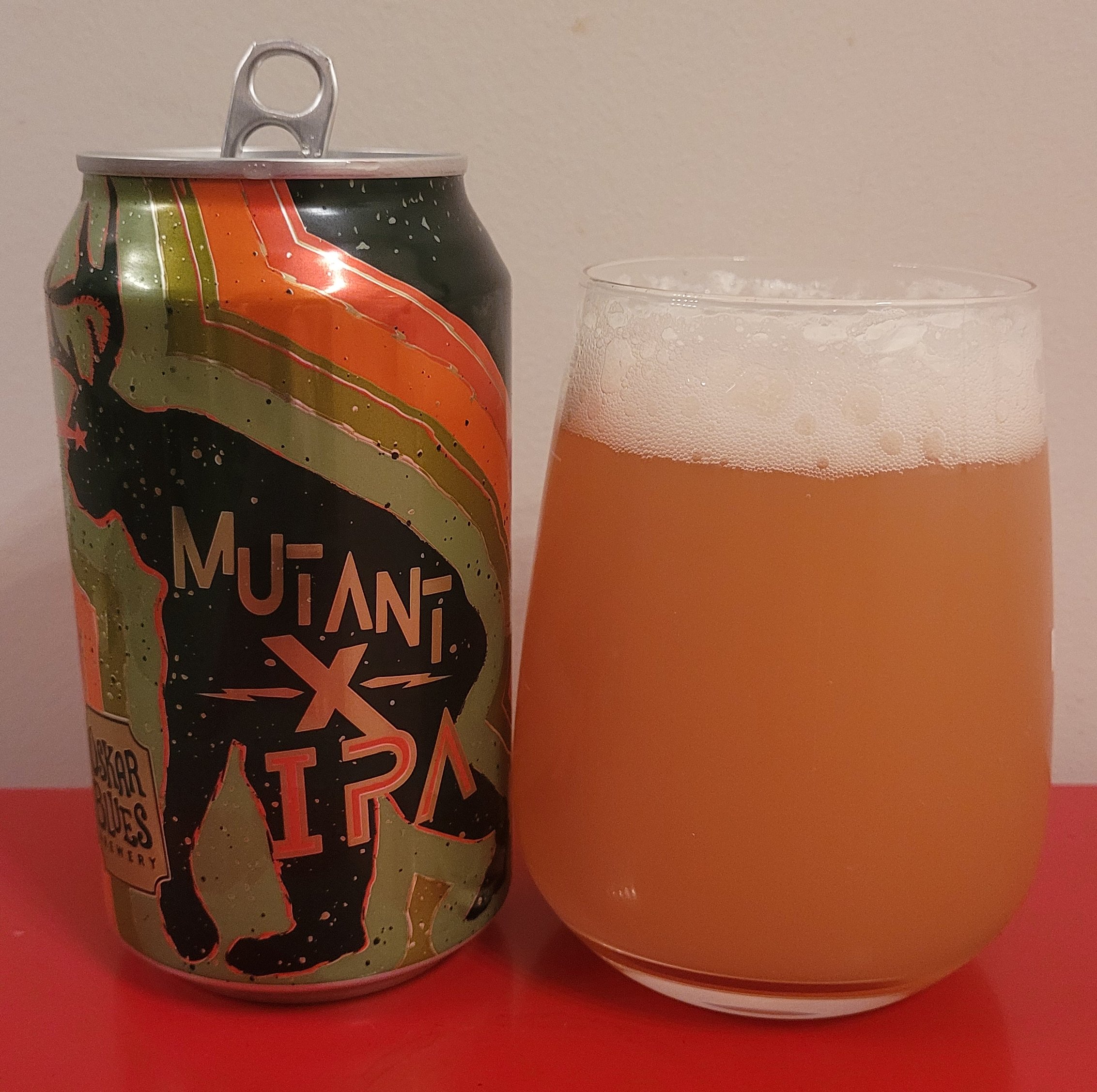
Finally it's Oskar Blues with Mutant X IPA, seemingly named for some unspecified hop extraction technology. It's a very eggy yellow and 7% ABV. The aroma is fresh and juicy, I'm sure as intended, like mandarin in particular. It's altogether more bitter and even a little savoury on tasting. Touches of fried onion and roast garlic, calming down to lime and grapefruit, before the fruit salad slides in again in the finish. A building weedy resinousness creeps in as it goes along, leaving the tongue coated by the end, in a very west coast way. It's quite the tour of American IPA attributes that Oskar brings us on here. Hard bitterness set on a fluffy New England texture. It's different, but I like it.

None of these three are their respective breweries' best work, but I can't really complain when their excellent core range products were on sale next to them. This is the life I chose and you're under no obligation to follow.