15 January 2020

If it's brown, drink it down

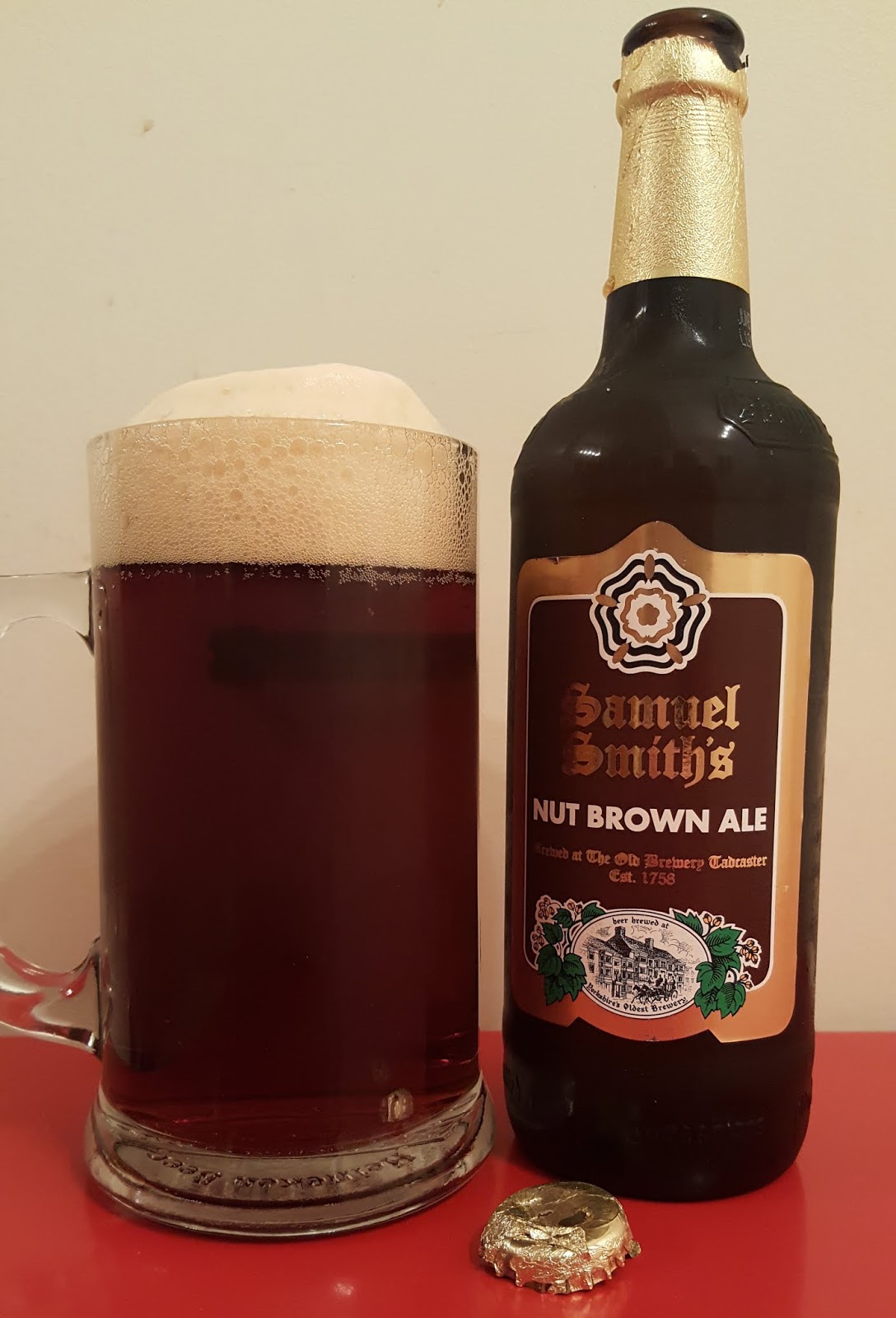
Huh. I bought this bottle of Samuel Smith's Nut Brown Ale in the belief that it's a packaged version of their Dark Mild. Everyone knows that's how English breweries work. But no: while the Mild is a mere 2.8% ABV this is a much more substantial 5%. The signature 550ml bottle meant I was in for a big chewy experience.

And while it is properly full-bodied it's not sickly sweet. The dark malts are balanced by a roasted spice, something along the lines of grains of paradise or even incense. Uncomplicated Yorkshire drinking this is not. A woody dryness brings us to cedar, proceeding from bitterness to an almost Flanders-red sourness, tartly oaky with port overtones. All of that is fun, but I miss the coffee and caramel that makes brown ale a satisfying style to drink.

While I enjoyed it, I did come out feeling gypped. It wasn't the sweet dessert substitute I had been looking for.

13 January 2020

The beagle has landed

BrewDog Outpost Dublin opened its doors in December. This long-anticipated addition to the Dublin beer landscape has chosen a daring location, at the very far eastern end of the south quays, where the city is still very much developing. They're clearly hoping for a high enough concentration of wealthy young tech and finance workers to keep the large pub/restaurant/brewery in business. But this blog isn't where you come for speculation on the economic ins-and-outs of the local on-trade. This is where I talk about beer.

The line-up on opening night was pretty standard for a branch of BrewDog: their own headliners, spiced up with some specials and rarities; a smattering of local guests, and some other representatives of UK craft beer, brought over directly.

L: Sweet George, R: Mashtag
I began with one from English brewery Buxton, a collaboration with Eindhoven's Van Moll, called Sweet George Porter. Sweet is right, though not in a sugary way. Instead this piles on the floral perfume: all the violet and rosewater. What I didn't realise at the time was that they've done this using chai spice mix. It's charming to begin but turns a little too intense after a while. What saves it is the light texture -- it's only 5% ABV after all -- and a growing coffee warmth. I think this is one of those beers that survives in spite of the novelty ingredients rather than because.

I owed my admission on the evening to Reuben, who was drinking Mashtag 2019. I hadn't had an example of this crowd-sourced recipe since 2015. Last year the chosen style was a 9% ABV red double IPA, and I guessed the latter part from the big fresh-hop aroma. It was a dark beer, though, and the flavour was much more malt-forward, based on sticky treacle and hopped malt extract. Still, it managed to stay mellow, the big hops and big malt coalescing after a minute or two into a smooth and genteel sweet vermouth effect. Red IPAs aren't usually my bag but somehow they've got this one spot on.

The other new-to-me BrewDog beer on the night was Cosmic Crush Peach. After ordering it I immediately felt regret in anticipation of another over-sweetened supposedly-sour fruit beer, but no: this is properly sour. That starts with an aroma like cap-gun smoke, leading on to an invigorating bitter tartness: peach skin meets gunpowder. There's more than a hint of lambic about this one, certainly compared to most breweries' sour efforts. It's mouthwatering, complex and, above all, fun. A little severe, perhaps, but very interesting with it. There's an excellent lesson here in how, if you must have fruit syrup in your sour beer, it should complement the acidity, not drown it in sugar.

The next BrewDog beer to come my way was a couple of weeks later in Shelby's, the new Peaky Blinders theme pub in The Hague. It has Punk and a rotating BrewDog tap, which on this occasion was pouring Origami Outlaw, a 5% ABV pale ale with hibiscus and yuzu. It tastes like an apricot smoothie, though not too sticky, thankfully. There's a spicy jasmine perfume quality, which I'm guessing is down to the hibiscus. This is tasty and unfussy; close to being the sort of over-sweet novelty beer I dislike but successfully avoiding it with a deft lightness of touch.

We'll finish with a couple of cans acquired closer to home. East Coast Crush is a New England IPA, a very unAmerican one at 4.8% ABV. Still, it walks the walk at session strength. Cloudy and yellow, it smells of fresh late-added hops: lime and grapefruit with grassy overtones. Fans of vanilla and garlic flavours in their IPAs will find their needs met in this, and there's even a hit of alcohol heat in the finish. Dankness and more citric qualities also feature. Pour carefully from the small can, however: it doesn't get better with the soupy dregs added. Sure, it's a little samey, but isn't that the point of a beer style to some extent? There are no off flavours; no thinness or compromise: here is everything NEIPA in a tidy little package.

Another one promising on-trend craft idiosyncrasies under a medium-strength flag is the 5% ABV Zombie Cake "praline chocolate porter". And again you pretty much get what's promised. Chocolate is front and centre, sweet and milky with a little salt, and this is balanced by a gentle roasted bitterness. That's about it. It's understated for a novelty and I think needs something else. A little chilli, maybe? As-is, it's accessible and uncomplicated but still provides a respectable level of interest.

A decent bunch, this. BrewDog, for me anyway, continues to shout about how outrageous they are while making steadfastly reliable and well-engineered beer.

10 January 2020

The red dot

I'm always up for some tomato-based beer fun so was delighted to receive this can of Asahi Red Eye from top beer writer Aran. Lager with tomato has a proud history in North America so why not start one in Japan, or anywhere else? It's a hazy pink in the glass, the head crackling away quickly to leave something that looks like red grapefruit juice. There's no mistaking the fresh tomato in the aroma; raw and unsalted, with no spice or seasoning. The sensation on drinking is more typically lagerlike -- thin-bodied and full of fizz. Then the tomato kicks in, with all the acidity of real tomato chunks, seeds and all. It is... unsubtle. If you want the full and uncompromising gazpacho effect, without nuance or complexity, then this is the tomato beer for you. Me, I was itching to toss some black pepper, Tabasco or basil into it all the way through.

That came as part of a double act with Echigo Red Ale. Echi-who? "Japan's first micro-brewery" says the can. It looks like a typical red ale: a copper-to-chestnut sort of colour, and this time with decent head retention. This is very much in the now-retro American amber ale style. There's a base of light toffee, a sprinkle of burnt caramel, and then topnotes of peach, grapefruit and other C-hop-derived fruits. What distinguishes it is an odd metallic saccharine tang which doesn't ruin it, but doesn't help either. Overall it's rather good, pitched right in the middle at 5.5% ABV with just enough hop character and just enough dark malt. In my opinion this style never got a fair shake over here, going out of fashion before the scene was developed enough to brew it. Never mind west coast IPA: bring back American amber.

Both of the beers in these red cans surprised me. I guess that's Japan for you. Thanks Aran!

08 January 2020

Rhu the day

Before the whole Jester King thing, UnderDog went through a kegged Cantillon phase. The one of particular interest to this ticker was Nath, a lambic with added rhubarb.

It's a pale pinkish copper colour and smells classically gueuze-y: bricky cellars and saltpetre, though there's a suggestion of jam tartness in the background. The texture is a little thin and there's a slight watery quality reducing the depth of the flavour. Said flavour is great, though. All the lovely lambic characteristics as suggested by the aroma: a lip-smacking mix of old oak and sharp acidity. Very much the Cantillon house style.

The rhubarb is present too, however, in a parallel complimentary fashion. It adds a balancing sweetness to the foretaste; a candy flavour that might overpower a less sour beer but merely adds personality to this one. After a swift brush across the palate it vanishes politely, resuming normal lambic service for the final few moments.

Cantillon has lots of "fun" twists on its basic product, not all of which work. This does though, preserving what was good about the base beer in the first place and bringing to it a genuinely interesting new dimension.

06 January 2020

Back to Black's

No sooner had I finished my giant Twelve Brewers of Christmas run-down (see last month's posts) than I came across this pair, just too late to put them in. Therefore Black's of Kinsale becomes the first Irish brewery up for review in the new decade.

Lemonade Stand is the latest in the terpene-infused Kush series, and a lager. It looks handsome in the glass, a pale amber with a slight haze and topped with a very continental thick and fluffy head. Only 4.2% ABV it's a little thin, but it's definitely not boring. The aroma is striking, and quite difficult to describe. Dark apple juice, nectarine, orange zest and tinned lychee: all the sweet and juicys. The flavour has that too, though less intensely than the aroma. The fruit is balanced by a pleasing dry crispness. It therefore mixes novelty weirdness with classic lager qualities and I think it works. Might not be for everyone though.

The fruit theme continues with 8-Bit, a cherry stout including cacao nibs. It certainly smells of chocolate and cherry. The latter is powerfully present in the flavour -- jammy syrup and strong perfume. The cakey chocolate helps soften this, giving it a feel of Black Forest gateau in the finish. There's just enough real stout flavour to keep this from being labelled a pastry one: proper roasted dryness and even an echo of old-world hops. It's only 5% ABV too, so the added flavours don't have enough of a base to turn cloying. This is just daft enough to be fun without turning stupid.

Whatever you think about terpene lager and cherry chocolate stout as concepts, Black's can't be accused of brewing run-of-the-mill beers these days.

03 January 2020

Jokers in the pack

UnderDog ran a series of Jester King beers through the taps on successive Thursdays in October. Well it doesn't seem like that long ago. Shut up.

Week one was Cerveza de Mezquite, described by the brewery as a farmhouse ale with mesquite beans. Mesquite comes in beans now? It's 5.6% ABV and an opaque orange colour. A sour tang in the aroma sets the tone at the outset. That continues all through the flavour, joined by an oaky white-pepper spice which contrasts with gummy Brettanomyces peach notes. All is as-expected so far, but then in comes a summer fruit vibe -- raspberry and strawberry -- lightening and brightening the whole picture. This is very nearly lambic-like in its complexity, increasingly so as it warms. There's even the hard wax bitterness in the finish, eventually. I can't say I recognise those mesquite beans, but really it needs no novelty embellishment.

Part & Parcel is also billed as a saison but again goes big on the sour. A dark red-brown, it gives a vinegary tingle to the nose hairs. In the flavour there's a crunch of dark grain then sour cherry leading to a strong balsamic vinegar twang which forms the bulk of the taste. The carbonation level is so high I would swear this came from an over-primed gushy bottle rather than a Keykeg. Easy drinking this is not. And I'm not sure it's worth the effort: it has too much in common with wonky Flanders red, the vinegar simply refusing to quit. 33cl was as much as I could handle, even at the modest 5.5% ABV.

The last one to come my way was Simple Means, described as a smoked Altbier, which sounds like a reasonable experiment for an American brewery to try. So then why did mine smell like another Flanders red? It's also black. No marks for meeting expectations so far then. It does at least taste smoky: a peaty phenolic bang which is quite tasty. But I was expecting a lager, and the vinegary twang makes it taste like bad lager. Putting thoughts of Düsseldorf out of my head, this is a fairly average sour dark ale with extra smoke. The flavour isn't cloying or difficult but it doesn't go anywhere interesting and definitely doesn't deserve to be called an Alt. I probably would have been prepared to give it more of a pass if they'd described it differently.

I went into this sequence believing Jester King could do no wrong. I guess every brewery's reputation falls apart eventually if you drink enough of their beer. There's a gloomy thought to begin 2020.

01 January 2020

Everywhere and nowhere

Huh. Looks like it's January again. Time to pick over the remnants of the holiday period and check the back of the sofa for beer money. Me, I've been to Aldi. They added a new eurolager knock-off to their line-up and, after being impressed by Rossini last year, I figured it was worth a punt. That gave me an excuse to compare it with their more established brand-leader substitutes.

But to the new one first, and Carullo Especial is a few centuries late to claim any real Spanish heritage: the label states it was brewed in the Netherlands, I'm guessing by Swinkels. From the scarlet livery I'd say Estrella Damm is the target of its appropriation. It's quite a weighty lager, feeling stronger than its 4.8% ABV. There's a dense breadiness in the flavour and not a whole lot else. I get a vaguely green grassy tang from the aroma but no hop flavour I can detect. I can't find anything to be critical of here other than its crashing dullness. If clean and bland is what you value in lager, this one fits the bill, and doubtless that's the intention.

Stacked high and sold cheap in Aldi since time immemorial is Galahad Export. The very English stylings suggest Carling is the niche they're aiming for with this, a beer with nowhere near the status here as it has in the UK. Still, if my observations in the check-out queue are anything to go by, Galahad is undeniably popular. No provenance is given, nor list of ingredients, and it's a meek 4% ABV: another nod towards Britain where that's deemed an acceptable strength for mainstream lager. The appearance is undeniably handsome: a strawberry blonde with a head of purest white. A grainy aroma becomes a corny foretaste so I suspect the use of maize in this. After the initial burst of sweetness it turns dry and a little musty. The vaguest tinny tang of hops appear on the reflux. All, therefore, is in keeping with your bottom-of-the-barrel international adjunct lager. I drank it as a literal lawnmower beer and the first few gulps were deliciously refreshing but it turned harsh, dry and unpleasant very quickly.

We class it up next with some reassuringly expensive Sainte Etienne. It does state it's brewed in France this time, and at just 4.8% ABV your wife can rest easy. It also looks the part: a bright gold with lots of fizz. The texture is decently heavy but oooh the flavour is not right at all. There's a similar stale mustiness as I found in the Galahad but it's combined with a bizarre herbal flavour: mint and aniseed, with a concentrated poppy or caraway afterburn. Thankfully that fades quickly but there's a long residual syrup effect which is actively unpleasant. Charitably you could call this a heavy hearty beer for manly men; realistically it's just difficult to drink and a bit nasty. They've called it Sainte Etienne but the real martyr here is your correspondent.

Switching tack for completeness sake, a new addition to Aldi's Irish range, or at least one that had hitherto passed me by. The Brown Bears already include an IPA, IPL and DIPA, but now there's a Brown Bear Session IPA too. As with the rest it's brewed by Alltech in Dundalk, and a couple of bottles were sent to me by Aldi as part of their 12 Bears of Christmas box set. The colour is a bright gold with a little haze. 4% ABV shouldn't necessarily mean it's watery, but it is a bit. The carbonation is low, which contributes to the thinness but also, I guess, the sessionability. The aroma is a fun mix of apricot, lemon and nutmeg but the flavour is plainer: straight citrus with just a hard wax bitterness in the finish. It's fine, and I could imagine settling into a few of them, but I think I prefer this style to be more fruity and rounded than palate-strippingly bitter.

It's great that the German discounters give us such an extensive beer choice, and that the market supports that. However, nothing here has the beatings of their Aldi shelfmates, Spaten and Rheinbacher. If you want to see out January with good quality, attractively-priced beer, they're still the ones to pick up.