02 December 2020

Century city

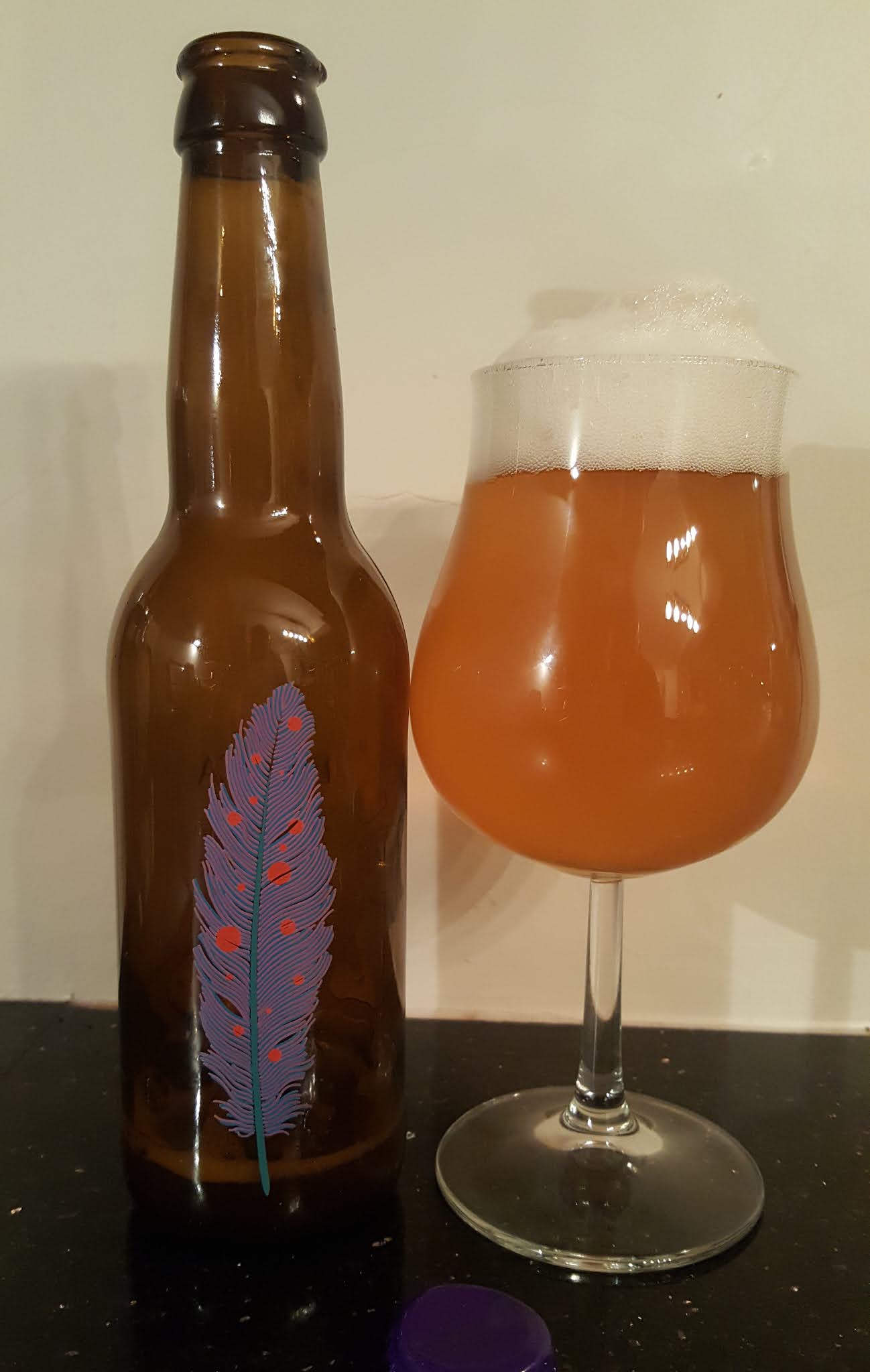
Today's beer came courtesy of Eoghan Walsh, author of the Brussels Beer City blog and was created to accompany his book of the same name, on the history of brewing in the Belgian capital. It's that most Belgian of styles, a Scotch ale, created at Brussels Beer Project in the heart of the city, following the best estimation of what these were like a century ago. Sctch 1920 is the appointed name.

As a 21st century sort of bloke I expect Scotch ale to be darkish, but this is quite a pale amber, mostly clear with just the faintest haze. No immediate esters feature in the aroma: it smells quite plain, just slightly sweet, and that's backed up in the syrupy texture. Par for the course at 8.8% ABV. Surprise number one is the bitterness: a serious waxy kick, somewhere in the same zone as a north-German bock or a north-English bitter. This doesn't hang around, however, giving way presently to floral honey (an ingredient) and a little of that hard orange-flavoured travel sweet found in tripel, a beer style which is arguably a descendent of this one. A slightly oily herbal note -- marjoram and dill -- finishes it with a bonus balancing bitterness.

I can see the relationship between this and modern Belgian tramp-brews like Gordon Finest, but there's definitely an extra nuance, which I'm taking as hop-derived. Interestingly, they went with Belgian Groene Bel hops rather than a more typical English variety. This is a solid, old-fashioned, heavy-bodied sipper. Unlike with many a candy-infused modern Belgian beer, you know when you've had a drink when you've had one of these. Thanks to Eoghan for letting me try it.

30 November 2020

Wotta lotta DOT

Over the last few months, DOT has been releasing beers literally faster than I can track down and drink them. It's time to clear out the fridge. This may take a while.

We begin with Barrel Aged Just Peachy Milkshake, more a rebrew than a variant on the original from 2018 (reviewed here) as it too was barrel-aged. The ABV goes up to 6% from 5.5. The ex-bourbon barrel is very obvious from the aroma: there's a vanilla heat from the get-go. The fruit asserts itself in the flavour: a succulent peach tang arrives first, followed quickly by the candybar lactose and then the more grown-up whisky. It's a fun combination and works really well. Each part makes a contribution without dominating or unbalancing the overall picture. It should be a silly gimmick, suggesting something created for the name rather than the resulting sensory experience, but the resulting sensory experience is superb. I notice it's not badged as an IPA, which is fair as the hops play no part in here. It gets sweeter as it warms, but thankfully it's drinkable enough for this not to be a problem. This one is exclusive to the Molloy's chain. Go there and get some if there's any left.

There's a new DOT/Redmond's exclusive, A Barrel Aged Amber Ale. "Very good, if I do say so myself" said Jimmy Redmond as he swiped my debit card. It's 7.8% ABV, and a murky brown-red. Madeira and bourbon were the original purposes of the barrels that it aged in. Unsurprisingly given all that, there's a rich butterscotch aroma, with sparks of liquorice and clove. That's not the first flavour: I get strawberry jam, warm white bread, and a less-welcome gritty yeast note. The bourbon vanilla comes in behind this, and a little of that Madeira richness and warmth. A traybake of caramel, biscuit and chocolate forms the finish, sprinkled with some surprise desiccated coconut. To me this tastes a lot like DOT's other barrel-aged reds, and the Rum Red Dark series in particular. While I appreciate the depth of flavour on display, it's just too sweet and butterscotchy for me. I'd like more of a spirit kick from the barrels and, in all honesty, probably for it to be a stout.

I only had to wait a few weeks for that wish to be fulfilled. Redmond's and DOT  present: Amburana Stout. I hadn't heard of amburana before but it seems to be a wood commonly used for cachaça-ageing. There's some ex-bourbon barrels involved here too; sure why not? It smells classically stouty: roast and bitterness, with cocoa and coffee grounds. There's a milky sweetness at the front of the flavour, though lactose does not feature in the ingredients and the can tells us that sweet vanilla is an amburana signature. Well then. The fade-out comes quickly for a 10%-er, bringing milk chocolate, condensed milk and a cheeky twist of the bourbon's sour citric side. It's a straightforward offering: no crazy somersaults or random twirls, just smooth sailing all the way. While sticking to the norms of strong sweet barrel-aged stout, it does bring a bit of a fun twist. Whatever one thinks about DOT's output, one is never bored.

Not to be left out, Craft Central also has new DOT exclusive, a sherry and bourbon aged pale ale called Central Perk. A murky orangey-brown, it smells quite sharp: an eye-watering solvent note, doubtless from the barrels. There's some gentler fruit in there as well, a fruit salad of pear and mandarin segments. It's quite juicy on tasting, the wine and whisky cask flavours subsumed into fresh pineapple, lychee and white plum. From the aroma I thought there was going to be a big boozy kick to it, but it's actually very smooth and easy-drinking, the flavours well integrated. There's maybe a little grape character from the sherry, but none of the brash lime and vanilla that often comes with bourbon. This is a delicious, mellow sipper, just shy of 8% ABV. Take your time with it.

Celtic Whiskey / Craft Beers Delivered is a first-time bandwagon-jumper with Hibernation Sensation, an imperial stout aged in Pedro Ximénez and rum ex-whiskey barrels. It's 9.7% ABV so there I was poised for the weight and the coffee and the cocoa. Nooooo... This is highly attenuated to the point of being thin. There's a distinct brisk sourness, lots of vermouth-like herbs, dry raisins and then maybe a crumb of very dark chocolate on the end. Old Uncle Pedro has been very busy in here: it's not a style of sherry I buy on the regular but I remember how it tastes, and this beer has quite a lot of it. In short, it's weird but it works. Fans of big, diabetes-inducing imperial stouts may get a sharp shock; I liked the sharpness, the acidity, and ohh there's the coffee now.

Another Teeling Distillery exclusive follows that: Rising From The Ashes, which is a blend of red ale and imperial stout aged in barrels which, by the looks of things, previously held the Blackpitts peated single malt whiskey Teeling's launched recently. It's 7.4% ABV and pretty imperial-stout looking. The aroma is sweet in a toffee-meets-chocolate way, suggesting the red hasn't been buried completely. You have to wait for the flavour to get the smoke, and it's not smoky-smoke but phenolic whisky smoke: seaweed and Elastoplast. That tang fades and a rich coffee comes in behind it, with a squirt of cream and a sprinkling of chocolate to soften the phenols. The overall impression is of a beer that's smooth, rich, strong (stronger than the ABV) and with some classy sippable whisky characteristics thrown in. For a beer aficionado it's a bit of fun, while I can see a whole new world of flavour opening up for the dedicated whiskey fan. Most importantly, I could taste the fun DOT had, playing with barrels Teelings provided.

Nothing so simple as a brewer-retailer collaboration next: Over A Barrel is an imperial milk stout created for Two Sides, itself a collaboration brand of 57 the Headline and Brickyard. We're back on the tall cans, lads. Hooray! This is 8.2% ABV, and cognac barrels provide the evening's entertainment. I enjoyed the flip-like aroma of warm brandy and cream, and it really doubles down on the boozy cream effect on tasting. Think Irish coffee, think egg nog. There's a little roast to remind you it's a stout and a seam of vanilla ice cream to point out that it's a milk one. It's not cloying, however: I liked how the spirit sharpness clears all the stickiness away, leaving a clean and spirituous warmth. The end result is a lovely combination of liquored-up casks with soft and gentle strong dark sweet beer. I don't know if it's even possible for something like this to become a regular-production beer, but I'd love to see it.

Another tie-in of a sort is the Brú Brewery collaboration Well Rounded Individual. This takes a red ale aged in Amarone and dark rum barrels and mixes it with a bourbon-aged amber ale. At this point I'm not sure there's a difference between R&D at DOT and the absolute sesh. Anyway, it finishes up at 7.25% ABV and is a murky reddish-brown colour. The bourbon makes itself felt in the hot vanilla aroma which had me braced for something harsh on tasting. Surprise! This is beautifully smooth and mellow, opening with red grapes and raisins, then silky chocolate and mild-roast coffee, before a tangy lime and jaffa finish. It's for swirling and sipping and savouring, displaying all the warmth and depth of a beer close to double its strength. The can and its abstract art suggest craft daftness, but three mouthfuls in I was imagining it served in a cork-and-cage bottle. Red ale gets some bad press, but if more of them were made at this boss level it might get more respect. 

I'm on record as not being a huge fan of DOT's straight IPAs so can't help but feel a little trolled by one called IPA IPA. IPA squared. The quintessence. It's 7% ABV and combines Simcoe, Amarillo and Galaxy into an opaque orange package. The aroma is strongly pithy with a little rotten and funky tropical fruit behind. It's a while since I tasted garlic in an IPA -- I thought it had gone out of fashion, but here it is back. There's a kind of plasticky twang, sharp lime rind, and all set on a thick base of vanilla. IPA IPA is thoroughly modern milkshake, and I don't really care for it. It's the wrong kind of bitterness and the wrong kind of sweet, the flavour elements fighting each other and me getting caught in the melee. It'll have its fans, of course, and I will respectfully leave them to it.

I'm sure there's a reason why this one is called A Throw Away Play, but damned if I know what it is, or where it's brewed. I can say it's a double New England-style IPA of 8.2% ABV, hopped with two stone-cold heroes, Citra and Vic Secret. It's a rather off-putting mucky ochre shade and smells very resinous: savoury and almost smoky. This is going to be an intense and serious experience. Sure enough it's dense, a little hot, and plenty bitter, in a most non-New-England way. I had to let the acidity run across my tongue a few times before I could pick out any flavours. Vic's aniseed buzz is there, and a particularly concentrated showing from Citra's lime peel. After these nuances there's a rough plasticky finishing twang and that's your lot. It's possible this is a cruel practical joke on drinkers of fluffy vanilla-flavoured New England IPAs. It is an absolute hop-beast, and while I can make room for that sort of thing when done well, this one is just too rough and dirty for my refined palate. The same thing with a clean and flocculent yeast could be a winner, though.

OK, that's quite enough of that sort of thing. Let's get back to the barrels and the blending and the imperial stouts. State of Mind is another one which mixes the stout with a red, but also an oatmeal stout. It's also another where a barrel of "peated single malt Irish whiskey" was involved, again suggesting Teeling Blackpitts. This is a chunky 10.2% ABV and looks quite brown in the glass. The stout side of the equation is surprisingly low. It's creamy and sweet with lots of runny caramel, giving an initial impression of an Irish red. There is little sign of the barrels or all that booze, and it's remarkably thin. The third sip was where I finally got the spirit side, a muted vanilla and a tiny hint of that peat. And then it all tails off into vague milk chocolate and water. It's not a bad beer but it talks a much bigger game than it ends up delivering.

The last beer for today is a relatively simple offer. Magnanimous imperial stout is a mere 9.5% ABV and involves just one type of beer, aged in a sequence of barrels which previously held cognac, bourbon and Irish single malt. It's a deep and opaque black in the glass, cola-brown at the edges. I've probably used the word "rich" too much in this post already, but this is rich: a sumptuous and warming mix of Christmas pudding and red vermouth with bonus aniseed, sultana and cocoa. It's a beer that rewards slow sipping,the flavours unfolding gradually, but steadily. An earthy farmyard funk provides the bassline to everything else. This is one where I was still writing about it when I got to the end of the glass so if you want the full picture, buy two. It's certainly not your typical imperial stout, transcending style boundaries in a very typical DOT way. For me it's a fitting endpoint to what has been an adventure in oak and whatnot.

Take a deep breath. More from DOT soon, probably.

27 November 2020

Appy days

Several breweries have released a tie-in beer to mark ten years of the beer ticking app Untappd, all under the slightly tortured name of I Remember My First Check-In. The version from Beavertown was the only one to come this way, and I haven't had a Beavertown beer in ages so I thought it would be worth a punt, for the novelty if nothing else.

It's a kettle-soured blackberry and raspberry ale of 5% ABV, which I'll confess is not a description which stirs my soul. In the glass it's a cheery clear pink colour and there's a fun kick of citric-acid tartness in the aroma. The sourness is quite dialled back in the flavour, however, and it vacillates between a light refreshing sherbet dip and a heavier, sweeter jam. Its acidic yoghurty tang does help keep the excess sugar in check, and pleasingly there's more blackberry in the flavour profile than the usually-dominant raspberry.

This is everything kettle-sour haters hate about kettle-sours: it hints at the multifaceted joy of the sour beer world without delivering much of it. I thought it was fine: clean, spritzy and unchallenging. It could have been worse but even Untappd deserved more of a celebration than this effort.

25 November 2020

Go, lassi, gose

Today's beer is called Bianca, described as a mango lassi gose, brewed at Buxton for ridiculous Swedish contractors Omnipollo. Pouring took a while, due to the very high carbonation, but I eventually got a slightly cloudy golden glassful.

Something's up in the aroma. While it's piney and herbal, there's a suggestion of something more severe: a harder phenolic medicinal/chemical quality which I'm not sure is meant to be there. To put not too fine a point on it, the damn beer smells of formaldehyde. Thankfully that side is no more than an echo on tasting and the rest of it really does come through like a lassi: thick, salty and fruity all at once. I guess it's the salt that made them decide to badge it as a gose but it doesn't taste like a gose, being denser and sweeter.

Ultimately I think there's a clash here between the sweet and salty sides, and I should declare an interest in saying I don't really like lassi for that exact reason. Fill your boots, Omnipollo fans and those who think weird in beer automatically means good. This one wasn't for me.

23 November 2020

November grain

It's been a while since the last round-up. Let's get some of the autumn backlog cleared before we go properly into winter.

Something light to kick us off, a DDH Session IPA of 3.8% ABV from Wicklow Brewery, called Coola Boola, brewed with Amarillo and Citra hops. The latter means that even though it's soft-textured and fruity, there's a satisfying bitter bite too: a twist or two of lime rind. That sits in counterpoint to ripe peach and a little tropicality -- the blurb suggests lychee and mango and I won't argue. There's an impressive amount going on here, given the strength, and the mouthfeel is also uncompromised. That Citra bitterness does build to become a little harsh by the end, which might be avoided with a higher gravity. It's still nicely done overall, though.

Along similar lines is Trouble's new New England pale ale, Didi. This one is a slightly sickly yellow colour but the aroma is lovely: spiky grapefruit citrus and mandarin pith. A colourful mix of sweet and bitterness is promised, thanks to Simcoe and Talus hops. Despite the soft texture and fruity vibes it does taste properly bitter. Mostly that's the hops, and I'm guessing the Simcoe in particular, but there's a gritty yeast bite too, providing its own brand of sharpness, along with a dry, alkaline, dry-wall effect. I get a touch of caraway as well, as it warms. Those aspects aren't too loud, thankfully, and there's plenty of citrus fruit flavour to cover them. Overall, this is a bright and jolly pale ale, one which avoids the common traps of the New England genres. As such it might get a few clucks on stylistic grounds, but not from me: I like the cut of Didi's jib.

Her big sister arrived, paradoxically, a few weeks later. Gogo is the full 6.1% ABV, despite also being badged as a pale ale, and is a deeper shade of opaque yellow with lots of loose foam on top. It goes for a much juicier angle than Didi, and has the thickness to carry it, but preserves a pleasing edge of bitterness again, thanks to the judicious use of cloudy-beer saviour Citra. The other hop is Galaxy, and I'm guessing that's where the mandarin aroma comes from, as well as the peachy finish. Watch out for the pinch of garlic as it warms: despite everything going on, it's not really one to sit over. Nevertheless, it's another good effort, again far from your run-of-the-mill New England IPA. Best of both worlds.

Dundalk Bay has jumped on the no- and low-alcohol bandwagon with a new alcohol-free beer (which I haven't tried) and this Brewmaster Micro IPA at just 1.8% ABV. It's a pale yellow and hazy, presenting like a witbier. Pineapple is mentioned in the description and pineapples adorn the label, so there's much to expect. The aroma is more citrus than pineapple: lemon and tangerine. It's understandably thin but the promised tropicality does materialise: cantaloupe and pineapple juice, backed by more of that bitter lemon I found in the aroma, plus some oily resins. The finish is sharp and tangy, with a bite that's almost saison-like. For a low-strength beer it's very well done, making good use of the big hops without pushing things too far.

The first of today's cherry beers follows directly from Friday's post covering Kinnegar's Brewers At Play numbers 8 through 10. Brewers At Play 11 is a Sour Cherry Sour and pours fizzily, a fun bright pinkish-purple. Its aroma is quite jammy; tart, and more raspberry than cherry to my nose. As expected from that there's a major sweet theme in the flavour, failing to justify the use of "sour" twice in its name. The sourness feels a little tacked on, or rather: this was a basic kettle sour that's had cherry concentrate bunged into it. There's no integration of the beer and fruit sides. Still, it's only 4.8% ABV so I doubt it's intended as a serious exploration of the nuances possible. You can drink it, it's cleanly flavoured and enjoyable, and that should be enough. Barrel age it with some Brettanomyces, however, and it might turn a few heads.

You don't get many beers created to honour Henry Grattan (1746 - 1820) but I guess Dublin City Brewing felt they had to since they've co-opted the seahorses from his bridge for their logo. Patriot is the third release in their core range and it's not very pale ale at all, pouring a crystalline ruby-garnet. The aroma is a fun mix of toffee and citrus, making me think immediately of American amber ale -- a style in desperate need of a comeback. There's a little extra burnt roast as well. Alas the flavour doesn't quite live up to that promise. It unbalances too much towards the bitter side, tasting acrid and a little pukey. The sweetness is still there but it fights the hard bittering hops instead of softening them. There's a tannic quality that's very brown-bitter, but it's too intense to be enjoyable. I felt harangued by this one, so perhaps the Grattan tribute is apt. If you miss travelling to England for a tongue-lashing from an astringent ale, this might float your boat. Beyond the smell it's too harsh for me though.

It's taken me an age to track down the latest McGargle: Sammy's Citra Extra Pale but I finally nabbed a four-pack in SuperValu. This is a four-packable 4.5% ABV and a striking white-gold colour. From the all-caps Citra I thought the aroma would be sharp but it smells heavy and resinous, like a darker beer, silly as that sounds. It is lightly textured, despite the initial impression -- clean, fizzy and easy drinking. This is where I'd like to be telling you about the cool craft complexities this supermarket pale ale adds on as a bonus, but... it's not that kind of experience. The flavour is quite a plain mix of lemonade and white onions. Two kinds of tang, but not really complexity and lacking the punch that even basic beers from, say, BrewDog show these days. There's nothing wrong with it; I think I just expected more from a beer where the hop is part of the name, especially when that hop is good-time Citra.

Larkin's has been adding cold-brew coffee to rye to IPA again, having previously done so about two years ago. This time they've created a Rwandan Coffee Rye IPA, with Catalyst Coffee in Bray. I liked this more than the last one. It does a great job of drawing out the coffee's fruity side: cherry, raspberry and apricot in particular. The hop bitterness isn't left behind and there's a dusting of citrus zest as well as some of the grassy bitterness that comes with rye. It's easy drinking for 7% ABV, partly down to that juicy fruit aspect, but also a pleasingly cask-like level of carbonation and a dry tannic finish. Practice makes perfect, I guess: sticking to their guns on the coffee/rye/hops thing has yielded dividends.

Metal Beer Solid was a YellowBelly double IPA from a while back which I missed. Mercifully, the brewery has brought it back -- much appreciated! -- so I was able to catch up. It's a strange colour: dark and opaque, looking quite dreggy in the glass. The aroma offers enticing vapours of tinned peaches in syrup. I get a bit of a yeasty buzz from the flavour, but it's comforting New England fuzz behind that: fruit salad, a little vanilla and a soft, easy-going texture. 9% ABV has given it a chewable thickness, but it's not hot, cloying or difficult. This is an end of session sipper, weighty and satisfying but not so busy as to be difficult: the balanced, accessible sort of high-strength hazy DIPA.

Bridging the gap between the IPAs and the porters and stouts is a black IPA -- hooray! This is the third in the Oregon Grown series by Galway Bay and uses Strata and Meridian hops, added every ten minutes in the boil. It finishes up a substantial 7% ABV and is a very dark brown colour. The expected heavy dank is there, as strong black IPA does uniquely well, but there's a lighter fruit side too: white grape in particular. The flavour leads with a big bitterness, partly citrus chunks and partly smoking tar on a newly-surfaced road. It's gorgeous. The texture is suitably weighty, helping propel the flavours and letting them sit long on the palate. And that juicy nuance is right there in the middle: grape, gooseberry and lychee. This has all the hallmarks of a stone-cold classic black IPA, with a couple of bonus features for good measure. A worthy descendent of the mighty Solemn Black.

Sauntering across to the Galway Hooker brewery, here's the next in their Seafarer series, Cherry: a stout with "freshly pressed cherry juice" and cocoa. It looked pleasingly casky in the glass, a tall head of loose tan-coloured bubbles like it had just been pumped from the barrel by an oak-hearted yeoman. That had me fearing flatness, but no, there's all the sparkle that's required to enliven a 5.5% ABV dark beer. And the classic characteristics are central to the flavour: a burnt-toast dryness being the most striking feature. The gimmick flavours are subtle but present, and perfectly complementary. I probably wouldn't have guessed real cocoa was used: the chocolate taste is entirely in keeping with a flavoursome and balanced stout. The cherry arrives in the finish; jammy and sweet, but brief. This is stout first, fruit beer afterwards. It left me wondering what it would taste like without the novelty ingredients, though if you are going to have them, do it like this, without interfering too much in the base.

We move deeper into the dark section with a new one from Beoir Chorca Duibhne: The Night Porter. It's a deliberate throwback recipe, based on heritage Hunter barley, and a substantial 5.1% ABV. It looked pleasingly old-fashioned too, just missing the smiling face on the off-white head to pass for an antique Guinness ad. The rich chocolate aroma as it poured left me gasping to dive in. And then... hmm... It's sour. I wasn't expecting that; it's not mentioned on the label, and I wouldn't be at all sure it's deliberate. While it's only a light tang, it's enough to cover up whatever chocolate and roasted notes might otherwise have been on offer -- a faint dark-toast effect in the very finish is the only bit of proper porter I got. I tried considering it as a vat-soured porter, or as something in the Flanders red line but couldn't get past feeling gypped by not getting the porter it smells like. I finished the glass, but with disappointment.

To cheer me up after that, Locavore 2020, the second year in a row that Wicklow Wolf has used their own hops to create a stout, this year's a smidge stronger than 2019's at 5.6% ABV. Well, we've all had a rough year. Plain and daycent is the long and the short of it. There's a lovely creamy texture, though it's lighter than even the relatively modest strength suggests. The flavour, perhaps unsurprisingly, revolves around the hops: lemony and zesty, but in a way entirely suited to an old-world stout and not trying to pretend to be a black IPA. An understated dry roast arrives in the finish. Anyone looking for uber-craft bells and whistles will leave unsatisfied, but I definitely liked the classic stylings here. Stout as stout should be.

And finally for today, White Hag popped out another in their Dark Druid pastry stout series, this one a Chocolate Orange version. The orange is very prominent here, manifesting in the aroma first of all: a concentrated orange oil, just like you'd get from an actual Terry's Chocolate Orange. In the flavour it rides roughshod over everything else, resulting in a beer that tastes more like orangeade than stout. I'm not sure I approve. You get a square of dark chocolate in the finish which goes some way towards balancing it. It's annoyingly thin as well -- a pastry stout should be heavy and smooth; this one is much lighter than even 5.5% ABV implies, and with an overdone fizziness that doesn't suit its dessertish purposes. This isn't my sort of thing at all. I'm giving it up as a bad job and anticipating the next one: Mexican Hot Chocolate.

And with that, I note that the new seasonal releases are coming fast and, literally, thick. I'll do my best to keep up.

20 November 2020

Players

Kinnegar's Hazy Session IPA is the 8th in their Brewers At Play series, and if you want an indication of how much of a stranglehold this style has on Irish beer, the 7th was also a hazy session IPA. This is slightly stronger than its predecessor: 4.6% rather than 4.2%. It's a beaten-egg yellow colour and smells both fruity and spicy, offering tropical mango and guava with pink peppercorns and nutmeg. Nice. A harsh yeast bite lets the flavour down, turning it cottony and savoury from the get go. And around that it's just garlic and water with a mere hint of grapefruit on the finish. Overall, a prime example of this sort of thing not suiting me. Too much interference from the bits I depend on brewers to take out.

Number 9 retreads some familiar ground for Kinnegar: a Sour Lime Gose, calling to mind the lovely lime & Basil Behemoth Berliner weisse they brewed last year. This is just 4.1% ABV and a bright shade of orange, exactly as hazy as the IPA. The aroma is disappointingly sweet: a sticky citrus candy rather than clean salt and sourness. Thankfully there's a lovely pinch of tartness waiting in the foretaste, setting the tone for a complex and serious beer, not ice-lolly daftness. The lime is real and oily and bitter, like the shred in lime marmalade. After the initial jolt, it fades out on a clean saltwater tang. To balance the sour it's big-bodied given the strength, with a lovely soft and effervescent texture. Gose purists will still rankle at the inappropriate flavours, but I found it a jolly nice beer and a cut above how most brewers do sourness with fruit.

The programme accelerates into double figures with a Rye Lager. I'm not sure I've ever met one of these before. It's a middle-of-the-road 4.4% ABV, and both looks and smells like a standard pale lager of no particular style: fresh bread and cracked grains. The rye makes itself felt in the flavour. On an otherwise plain base there's the sharp grassy kick rye tends to give, almost gastric in its acidity. But because this is a lager, it doesn't hang around and fades quickly, leaving just a trace of bitterness in the finish. The hops aren't listed but I'm guessing they're something traditional and German. They don't get in the way. This is no Rustbucket but does offer an interesting twist on the Standard Lager Experience. I guess that's the point of an experimental series.

The titular brewers of the project, then, appear to be having fun. With hazy pale ale out of their system I look forward to trying the next one: No. 11 Cherry Sour is on the way to me.

18 November 2020

Glazen saison, Toren tripel

Today's post is a pair from Flemish brewery De Glazen Toren, one I haven't featured here before, I think.

"brewed according to the old Saison tradition of Hainault" proclaims the label of Saison D'Erpe-Mere so I expected a straight-up, classically-styled saison. It's frothy, to the point of gushy, and the ten minutes it took from opening the bottle to getting near enough to the liquid to drink it did not endear this one to me. It looks well: a proper farmhousey pale yellow. 6.5% ABV is a little stronger than I'd like, but acceptable if the beer's good. The beer is good, though the strength adds a weight which takes away from the crisp refreshing qualities of saison. As a result it's quite fruity -- peach and red apple, with a tang of lemon later on. A certain dry grain husk flavour remains, without making the beer itself dry, though the busy fizz helps there. Overall it's a B-, could try harder for me. Yes, it meets the requirements for a saison, but I think it would work better at a lower strength, and that gushing really needs sorting out.

The tripel that followed, Ondineke, was rather better behaved. It's 8.5% ABV, which is a little light for the style, while also a darker shade of orange in the glass than your typical saison. It smells appropriately spicy and warm, like freshly baked Christmas cookies. Once again the heat is very much brought when it hits the palate, but that's far more acceptable in a tripel than a saison. It's smooth and warming and cosy, with little points of nutmeg and  liquorice in the background. I could pick it apart further -- it has the complexity for that -- but I preferred just sinking into it and letting it wash over me. It's a while since I tasted any of the benchmark tripels so I can't give you a direct comparison, but by golly this will do.

One beer that's decent and one that's excellent. I suppose that will have to suffice until a return to Belgium is on the cards.