16 April 2021

Familiar fruit

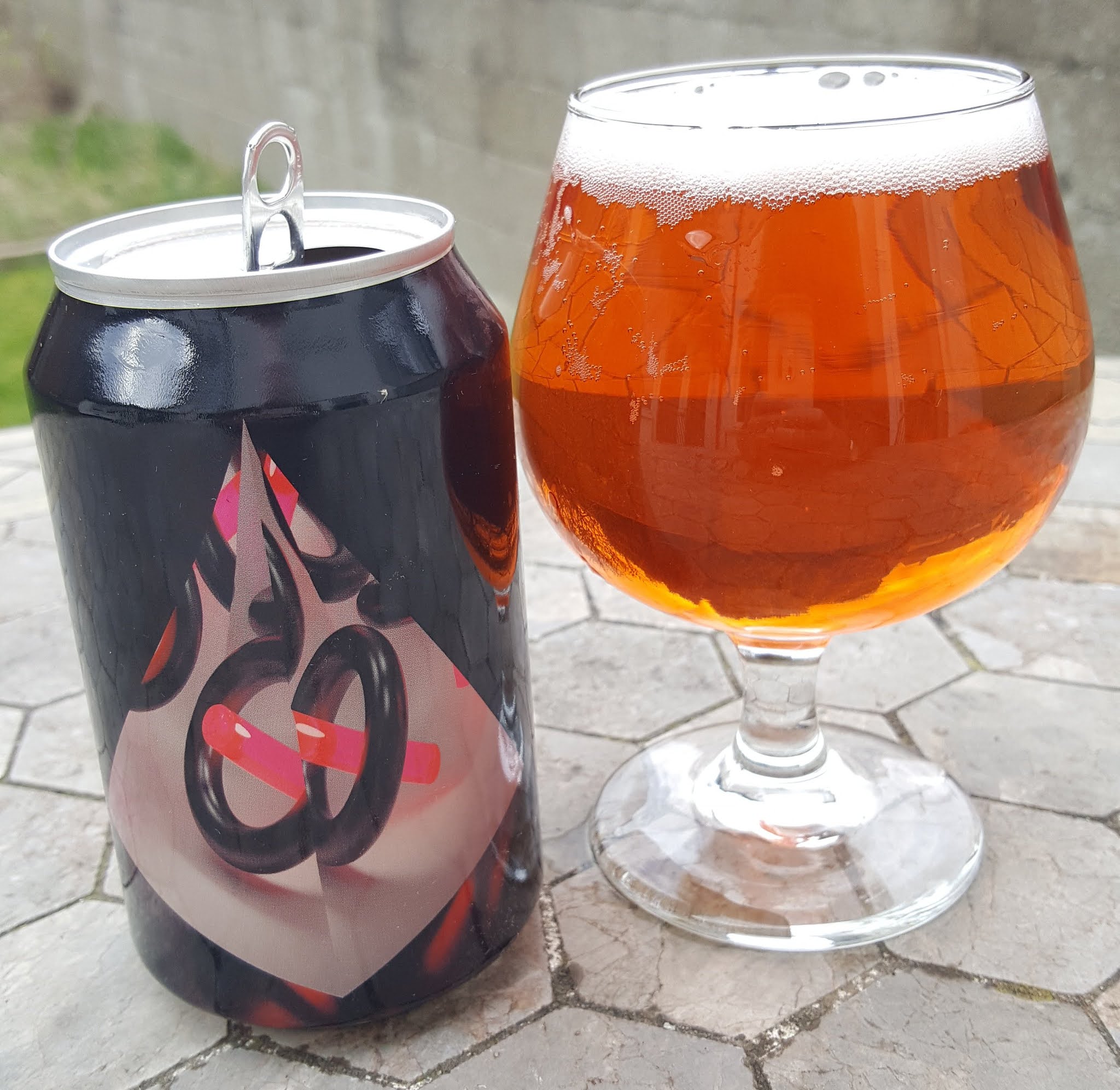
I use "nectarine" quite a bit in tasting notes, but I can't remember the last time I actually ate one. Or even saw one. I'm pretty sure they're real, though. And now Sierra Nevada has put some in a beer: Wanderland. The description is simply "nectarine ale", and it's a clear innocent yellow colour. But this being 'Murica, the strength is amped up to an unreasonable 7.5% ABV. Do nectarines work as good as hops do in strong pale beer?

Well no, obviously. But this isn't the syrup monster I pretty much expected it to be. The aroma is inoffensive: an estery banana kick with just a hint of stone fruit in the background. Lurking. But the flavour is clean! It's patently strong, even a little hot, but it's a clean burn, a lot like a Belgian golden ale. The fruit adds a perfume to the finish; slightly artificial, like candy chews. Does it taste of nectarine? Not really. I use that word when something is soft and juicy, whereas this is hard, and even a little dry.

I'm not sure what to make of it. It's not a silly fruit beer, but nor is it a serious strong ale. I appreciated how understated the added favouring was, though think that would work better in a lighter, fluffier wheat beer or the like. At least it's not another IPA. Well played on that, SN.

Which brings us to the next one with a sigh. Sierra Nevada are really stretching thin the Hazy Little Thing brand extensions. The newest is a west-coast-style imperial IPA, so "Thing" is the only applicable term of the three. With a crowbar and zero shame they've forced the name Big Little Thing onto it.

The aroma was disarming, however: I got a sweet mix of apricot, sherbet and candied grapefruit peel, with the added promise of a warming malty hug. The flavour is big, but surprisingly balanced, starting on a sweet floral lavender perfume, backed by lemon drizzle cake and fruit gums. And then there's a punchy, pure west-coast grapefruit bitterness keeping it all in check, fading on a serious oily herbal note: eucalyptus and rosemary. Even for a 9%-er it packs a hell of a lot in, and is fiercely good value at €3 a can. The only feature it has in common with Hazy Little Thing is that it's absolutely delicious, but that's fine by me.

14 April 2021

Non-fungible tinny

I'm a longtime fan of Wild Beer's Millionaire salted caramel stout, so when a brand extension passed my way I grabbed it. That's how brand extensions are meant to work. Trillionaire isn't merely an extra-strength version, however. This imperial stout is brewed with apricots and spices, so the experience is necessarily going to be different.

It certainly looks like a 10.3% ABV stout, and more. It pours thickly and the head is almost as dark as the very very dark body. Burning oil and rotting fruit gives it a post-apocalyptic aroma. This would be no smooth ride. The texture is as dense as it looked, to the point of feeling like drinking chocolate sauce rather than beer: syrupy, slick, and almost without fizz. The flavour proved gentler than expected. What I'm guessing is the advertised apricot comes across as black cherry to me: a slightly tart sort of sweetness. The spices feel tacked on, being a cinnamon and ginger effect that sits separate from everything else and doesn't contribute anything positive. They bring the dryness to the finish, which I suppose is balance of a sort, but who drinks something like this in the hope of balance?

Overall, I liked it. It delivers the basics of a big imperial stout with no clangers dropped. As usual, though, I don't think the brewery's attempts to make it more interesting by adding extra ingredients have improved it any. The chocolate yes, and they got lucky with the fruit, but not those spices. I would still like to try the beer I imagined: the chocolate salted caramel imperial stout. In my imagination it's delicious.

12 April 2021

This calls for a session

Forcing us all to buy three beers instead of one, DOT came out with a matching set of session IPAs recently. All three are 4.5% ABV and brewed with oats and rye, plus a varying combination of hops.

Hop lets us know from the outset what to expect, the hops in question being Hüll Melon and Vic Secret. It's a fuzzy orange colour and has a subtle aroma, with only a faint echo of Vic's anise-infused-kerosene bitterness. Sure enough it's sharp, and doesn't really have the body to carry its generous bittering quotient. Hüll Melon should be bringing some luscious white grape, in this drinker's opinion, but I don't get it. The initial bitterness is followed only by a different sort: resinous and spicy into the finish. It's not a bad beer but was a bit of a workout, and not something I'd consider entirely suited to session drinking. Let's hope for something mellower to follow.

The second one is called Drop, and uses what I thought was quite an orthodox combination of Centennial, Mosaic and Simcoe. I wasn't prepared for how intensely tropical it is. The aroma is like a sorbet: cold, a little sharp, but with an underlying succulent sweetness. This unfolds in the flavour into a very real passionfruit effect, flooding the palate before fading quickly, just like an actual piece of fruit would. A slightly harsh resinous bitterness forms the finish which here makes for an interesting contrast. Although the taste is a bit all over the place, it amounts to a pleasant experience, and certainly packs in a lot of complexity for the modest ABV.

Finally, of course, we Roll: this one with sweetie El Dorado, and The Bruce, a hop blend from New Zealand I've seen around but don't really know. It's a deeper amber than the previous, while the rye is quite apparent in the aroma -- that familiar grassy spice. There's a fair bit of fruit candy as well, though. Its mouthfeel is nicely light, fitting for a very juicy flavour: mostly fresh-squeezed orange, but with a touch of more exotic mango and mandarin. There's white pepper too, which I'm guessing is rye-derived, and dries things out considerably, becoming almost chalky by the end. That mix of juice and dryness makes for something very refreshing, exactly what's required of a beer like this.

I can't accuse DOT of turning out samey beers here, despite the labels. These each have their own character and demonstrate well how a beer's whole nature can be changed by tweaking the hops. As well as buying a session, you're buying an education.


The DOT train rolls faster than most in these parts, and no sooner had I dispatched these than seven new releases arrived more or less simultaneously. The range of styles and strengths is prodigious so I'll take them in something resembling order. That makes Early Bird the starting point, a 2.8% ABV micro IPA. This is hazy but not wan-looking as low-strength IPAs can be, being a full and rich orange colour. What is typical of the style is the mineral dryness, here given a fun twist of peppery spice. Both are seasonings on the main juicy satsuma character, and there's a little dankness in the aroma. Citra, Centennial and Vic Secret are working away in the background though I couldn't really pick out their individual features. Overall, it's a pleasantly complex and full-flavoured job, while still light and refreshing as befits the strength.

That's enough IPAs for the moment. The ABV scale takes a jump up to 6% next, and the style a jump sideways to saison. It's still dry-hopped, though, so we're not out of those particular woods yet. The varieties are from New Zealand, hence the name: Maui. It's a beautiful clear golden colour with a fine white head. The aroma goes heavy on white pepper and dry straw, so very much a classical saison nose, free of hop gimmickry. The hops are present on tasting though not in a gimmicky way. The ripe white grape of Nelson Sauvin is entirely complementary to the dry saison spice, rounded fruit offsetting the almost acrid dryness. The base beer is saison the way I like it, and the hops are a well-chosen subtle twist. I recommend it to saison purists and the farmhouse-curious alike.

As a St. Patrick's Day special, the latest barrel aged pale ale created exclusively for the Teeling Distillery is Green With Envy. White port and Calvados filled the barrels before the whiskey before the beer. Intriguing! It's 6.2% ABV and quite thick with it, sluggishly forming a head as it poured; a bright and opaque amber colour underneath. The foretaste is heavy and sweet, all orange cordial and Jolly Ranchers. There's a little hint of spirit behind this; that mild oaky tang you get from highly involved whiskey cocktails. That's about it as far as the complexity goes. It's fine, but nothing special. My preference lies with lighter and more barrel-y takes on this sort of thing.

And so up we go to the higher reaches of beer strength, our next stop being an 8.2% ABV double IPA called Rip. Juice is promised, though it's a surprisingly clear rose-gold colour in the glass. There's a heavy dankness in the aroma, which doesn't say juice to me, and I can't say there's much in the flavour either. It is sweet though, but it's a malt sweetness, of the toffee and golden syrup sort. This is tempered by a hard citric bitterness -- lots of pithy grapefruit and beeswax. The alcohol makes its presence known too: very warming, though thankfully never tipping over into hot or difficult. This is a pretty solid west-coaster, all told. Forget the juice and enjoy the zest.

The herald of darkness is The Barrel Aged Adventures of Extra Stout, which I'm guessing is a barrel-aged extra stout (it's actually several, blended). It's hefty for that, at 8.6% ABV, and is another thick pourer. There's a light roast in the aroma though not much else. The flavour is subtle too, no big booze or concentrated chocolate. There's a gentle caramel and coffee, with a little whiskey-ish honey and a bite of burnt dryness in the finish. Really, this beer is more about the texture than the taste: it's beautifully smooth, making for dangerously easy drinking. Not DOT's best work in this genre but an enjoyable start to this black set.

Earlier this year, DOT recalled a beer due to excessive carbonation. I began to wonder if they've over-compensated in the opposite direction when I poured 2021 Contains Nuts. This was very nearly totally flat, and while it's a style you wouldn't expect to be fizzy, it could have done with a little more condition. I don't recall how much the recipe has changed from the previous annual iterations, but what we have is a blend of imperial stout and red ale, both barrel aged, coming out at 9% ABV. I'm not sure I would have identified the praline extract unprompted. There's a general nutty, chocolatey, caramellish candy bar effect: boozy Snickers, in short. A dry finish helps balance the sweeter excesses. Like the previous one it's smooth and easy going, but I was hoping for a bit more distinctive novelty. Don't go all classy on me, Contains Nuts.

At the end of the road, a beer from which I was hoping for something properly crazy: BA Imperial Sherry Milk Stout. Where to start? Well, it's black, and fairly flat again. I thought it would be sweet but instead it's delightfully herbal, with a bitter aniseed and pine kick from the get go. The alcohol warmth is the next most prominent feature, quite subtle given the stonking 11% ABV. A floral element of lavender and rose petal builds as it goes, though it never quite conquers that bitterness. A residual waxiness is the beer's calling card. It's interesting how little sign there is of milk, sherry or whiskey here. It's its own thing, though: a hard sort of imperial stout for the grown-up palate. As such, I rather enjoyed it.

A further new one arrived a few weeks after I'd finished this lot. Barrel Aged Imperial Pale are the beery words DOT has appended to this one, exclusive to Redmond's of Ranelagh. Behind the label is a rather dense and murky pale ale of 6.9% ABV, utilising ex-Madeira casks in its formulation. It smells strongly of raisins: a concentrated grape effect, err, because that's what raisins are. The flavour is softer and fruitier, with white grape, lychee and apricot, plus a gentle oak spicing. It does get a little sweet after a while, adding a slightly sickly cordial vibe, so maybe a 330ml can would have been more appropriate than 440. It's like the flavour profile is designed to be fun and easy but the high gravity has put the brakes on that. Overall though, it's very good, and an excellent melding of fresh hops with barrel-aged complexity. The sort of thing DOT does best.

How does one even begin to sum up? DOT has something for everyone, I guess.

09 April 2021

Hooray for pints

I do like these one-pint cans you get from Volfas Engelman, even if the beer inside isn't always stellar. It's nothing fancy today, just a handful of traditional European styles which I'd guess they have the knack of.

Bohemijos is a dark lager -- dark red rather than brown or black -- and is a mere 4.2% ABV. The aroma is interestingly fruity, with subtle notes of raspberry and strawberry. The texture is full and a little sticky. It feels wholesome and nutritious; creamy, not fizzy. The flavour still has that summer fruit element, but it's subservient to milk chocolate, burnt caramel and a mild herbal bitterness. It's not spectacular, but it is pleasant and different to anything currently being brewed locally. And even though it's Lithuanian it does a great job of channelling authentic Czech dark lager, albeit not the top-tier variety. Despite the weighty texture, it's perfectly gluggable, making a full imperial pint the correct serving quantity.

From Bohemia to Bavaria, and weissbier is the next style that ponas Engelman offers us an interpretation of. Maybe I should have rolled my can of Balta Pinta as a Bavarian waiter would, because it poured very clear, and quite wan and pale looking, despite the respectable 5% ABV. The busy fizz is bang on style, and I had hiccups to deal with before I could tackle the flavour. It, and the aroma, are very banana indeed, which I suppose is fair for the style. The sweet banana of those foam sweets is discernible, as is the more serious brown and mushy fruit: a whole spectrum of just banana. This is workmanlike, with no real complexity or flair, but no flaws either, unless you're a diehard supporter of Team Clove.

A black tinfoil lid on the next can: pure classy like. It would seem there's a whole range of "Galaxy" beers from Engelman -- this is Galaxy Šviesusis: the basic pale lager, 5% ABV and an absolute middle-of-the-road macro-gold. It's pretty sweet, with the full bready thickness of a Märzen and edges of caramel and brown sugar. Thankfully it's smooth and lightly carbonated, so not a chore to drink despite this. I get very little by way of hop balance, merely the faintest echo of dried grass. This is nearly excellent, but the sugary tang lets it down for me. I'm not averse to a clean yet chewy lager now and again, and this is certainly that, if just a tiny bit unbalanced.

The final one is Tradiciškas, a full 6% ABV. It's still a pale lager, though. A little bit of craft haze suggests that "traditional" may simply mean unfiltered. Fair enough. There's a wholesome cereal aspect to the aroma, with a marmalade old-world hop buzz too. Initially, I found no outward indications of all that alcohol: it's light and easy to knock back. It is once again quite sweet, though, with a fruit salad of apple, mandarin and grape. No crispness. As it warms, the fruit ripens and the booze emerges, and when it started to turn a bit solventy I emptied the glass. That gave me the rosy glow I was expecting from something with this level of poke. This is neither one thing nor the other, showing aspects of plain pale lager and super-strength loopy juice without being either. At least it was cheap.

All are pretty decent takes on the central European styles they've set out to clone, if a little unbalanced on the sweet side. That does mean you need to like the type before you approach them, and for that reason I'll single out Bohemijos as the best of the set. On my next buying round I'll be looking closely for tamsusis on the label.

07 April 2021

The Silk Road

It's always nice when the breweries come up with blog post ideas for me, so shout-out to Carlow Brewing and Hope for simultaneously releasing nitrogenated stouts in a can. I'm not the world's biggest fan of nitrogenated stout in a can, but who could resist a little side-by-side tasting action?

Without prejudice, I opened the O'Hara's Irish Stout first. There was a satisfying hiss from the depressurising widget. Once settled it looked just like a short-filled pint, so they seem to have got the technicals right. Both the aroma and flavour are far from dead, with rich milk chocolate in the former and a tangy spinach bitterness in the latter. It finishes on an espresso roast too, so O'Hara's-Stout-as-we-know-it is done no disservice by the nitrogen here. It's a daftly long time since I last drank this beer, but this matches well with my memory of it. It's maybe not quite as smooth as draught nitro stout, though again that's something I also haven't had in a long time, and I enjoyed the very faint sparkle. This is very well made and should do well out in the mainstream.

The other has no such ambitions. Hope Nitro Stout is No. 23 in the Limited Edition series, so I guess won't be around for long. There's no widget but it still surged and swirled, albeit briefly. The head was nowhere near as stable, however, and was beginning to fade by the time I'd typed this much of the review. It has the edge on the O'Hara's regarding ABV, at 4.8%. The aroma -- again, hooray: there is one -- is untypical for Irish stout. It's herbal and savoury; interesting rather than unpleasant. That translates to a substantial bitterness on tasting. 44 IBUs, the can helpfully tells us, but I would believe more. The flavour is tobacco, kale, bitumen and very very dark chocolate. Unsurprisingly there's much more sparkle than the other one, so you don't really get your money's worth from the nitrogen. But it's a lovely old-fashioned bitter stout of the sort I like. Breweries don't make enough of these so I give it a completely free pass on the gas mechanics.

The similarities here are purely superficial, and the respective beers are intended to perform different tasks for different audiences. As such, it doesn't really make sense to compare them. The character, complexity and big ol' bitterness of the Hope one endeared it to me in particular. If it's the nitrokeg experience that you're after, however, O'Hara's your man.

05 April 2021

Universal chicken

I have a tendency to rag on Omnipollo a bit here. The Swedish contract brewer is a byword for the candy-polluted pseudo-stouts that are a plague on contemporary beer. Yet I've generally found their less, shall we say, ambitious recipes to be well-made and enjoyable. That's what I was hoping from this set which appeared in Dublin, reasonably priced, a few months ago.

The first is called Sacho, described on the can as a "dry crush raspberry sour". I expected a dense opaque pink job but it's a clear shade of polished copper in the glass. Raspberry seeds form the aroma, and the flavour is unsurprisingly raspberry-dominated. It's not excessive, however; not jammy or sickly, as these can sometimes be. It's all rather restrained: fizzy raspberryade backed by a very gentle citric-acid tartness. It's only 4.5% ABV so I guess is designed to be refreshing, and mission accomplished there. I think a little more of a sour kick would give it some extra character. As is, it's plain and inoffensive fare. Could have been worse, I thought, and moved on.

A pale ale is next, called Ripples. I liked the trippy label design. It's 5.5% ABV and a hazy yellow, smelling intensely of oily roast garlic and fried onions. A thick texture and a vanilla-laden foretaste told me it was one of those. Urgh. Along with the custardy sweetness there's a harsh and gritty bite of dregs. Only the faintest hint of tropical fruit -- mango and pineapple -- makes it through the unpleasantness. This is an almost textbook-perfect example of how not to make pale ale for me. End-to-end hot yuck. People who like this sort of thing are just weird.

Clarity is restored, to an extent, with Grandin. This is another pale ale, though 7% ABV and fermented with Champagne yeast. It's a mildly hazy yellowish green colour with a mix of soft fruit and peppery spice in the aroma. Promising. The taste expands on this, the fruit side going all melony with a pinch of lime bitterness and a twist of white pepper. There's a perfumed floral side too, bringing jasmine and cedarwood. It's an interesting combination, and like the sour one above, it's done subtly, not blasting the palate with busy flavours. The finish is dry, of course, but other than that it doesn't have much of a Champagne quality. As a pale ale, or dare I say brut IPA, it's jolly decent.

The quartet ends on a modest 7.5% ABV double IPA called Double Noises. We're back to the haze, although it's a deeper and richer colour than Ripples and smells much less offensive, all peach and mango sunshine. The alcohol is extremely well hidden, making for some dangerously easy drinking. The flavour is a delicious rum-punch of pineapple, white grape, nectarine and guava. For all that tropicality on display, it retains a pleasing dryness, a palate-cleansing rasp on the finish. This is more what I was hoping for from the set: balanced, flavourful and utterly charming.

Only one total fail here, then. That's not a bad hit rate for the brand. I wonder what are the chances of a sane stout out of them?

02 April 2021

Chasing strange

In order to begin weaning myself off a full month posting about nothing but Irish beer, I've picked a brewer from Catalonia which uses the facilities closer to home, in Ballyfermot. Oddity, that is, brews these four at Whiplash.

Joint-lightest of the set is Crumbling Crowd, describing itself as a brown stout, since it's a stout which uses brown malt. Oats and amber malt feature too, alongside roast malt, making for a superb richness from the get go. It smells of coffee cake and cream eclairs and really doubles down on that coffee in the flavour. There's almost a tang to the roast, and bucketloads of brown sugar to offset its bitterness. This is a very busy affair. I like the mellowness that brown malt normally brings, but here it's drowned out by hard roast, vegetal hops and a vanilla sweetness. I wanted to like it, I really did, but it's just too jarring, too loud, the flavours not integrated enough.

The IPA at the same strength is Faded Movies: a particularly pale example, yellow and misty, like a witbier. Does it count as single-hopped when it uses a proprietary hop blend? Probably not, but it's all the New Zealand mix The Bruce in here. I don't get much of an aroma, just a vague lemony effect. The flavour is also a bit muted: floral perfume, a drizzle of lemon essence and a little vanilla. Nothing really jumps out. It would be a pleasant and simple refresher, were it not so strong. As-is, I find it nice, but a little lacking in character.

Hit me with your best shot, Oddity.

Man Behind the Scene is not the man behind the filter. This double IPA is incredibly murky: an opaque eggy yellow body was infused with skirls of dreg from the middle-to-end of the pour, with some bigger congealed lumps wallowing around as well. No. This is no way to present a beer, regardless of what fashion dictates. The aroma is somewhere between concentrated tropical fruit and super-sweet cordial, with a touch of garlic and caraway. This did little to endear it to me. The flavour is at least fairly clean, with just a gentle dusting of the dry and chalky grit. There's a big and comforting warmth, tasting all of its 8% ABV and more. For all the compromises that have been made for them, the hops should be singing in here. But they're not. It's happily peachy, with a little mango and honeydew, finishing quite quickly on a pinch of sharp citrus. Really, though, the alcohol is its dominant feature. I'm sure it wasn't meant to be a malty warmer.

Our finisher was, though, I've no doubt. I don't think I've ever seen beer described as a "double oatmeal porter", but Astral Trip is, another 8%-er. It's a very dark velvety brown colour and smells of warm chocolate, hot coffee and sweet tiramisu. Instant wintery comfort. On tasting you have to be prepared for the booze, because that's what hits first, with a lot of coffee laced through, like Tia Maria or caffè corretto. A more subtle side unfolds after the first kick. Dark chocolate, of course, plus bitter and oily rosemary, subtly perfumed rose petals and a harder tar burntness that works well in beers like this. Although it's a big big flavour, it's balanced and harmonious: much better than the porter we came in on.

Oddity has been going barely a year at this stage, and they couldn't be in better hands than the folks at Whiplash. I think there's still some dialling-in to be done with their recipes, however. Astral Trip is the one which shows me that the talent is there, and I will be buying their new ones when they appear.