03 January 2024

Cockles unwarmed

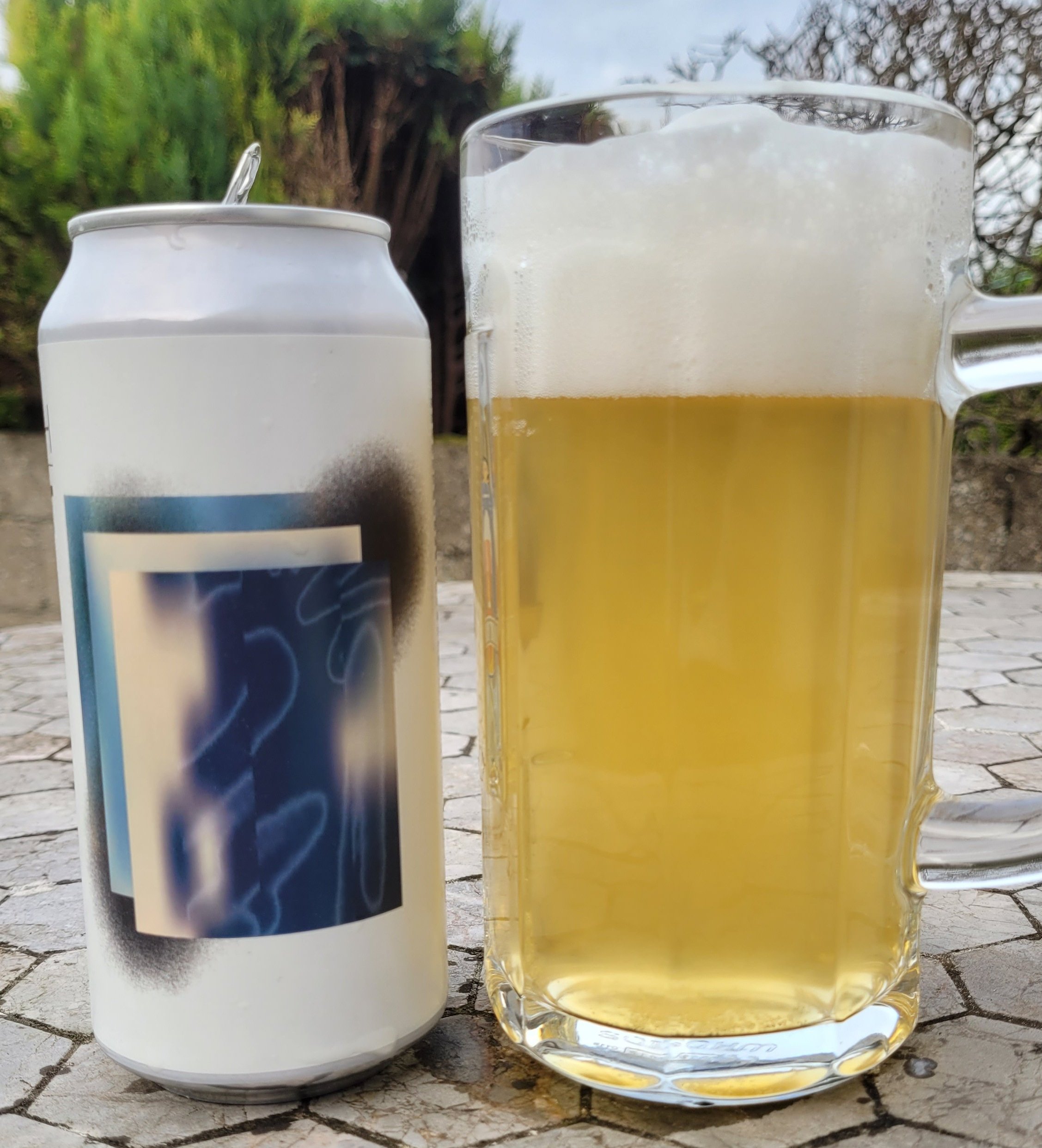
While we're still in the season of Christmas, here's an actual Christmas beer, acquired in SuperValu in early December. It's from Austrian brewery Stiegl, distributed in these parts by O'Hara's, and is called Christkindl Honey Amber Ale, part of one of those pretend small-batch series that big brewers like to do from time to time:"Kreative Braukunst. Slow Brewing". Yeah right.

It is indeed amber, on the dark side of it, and a little muddy looking. Honey is the only added ingredient so don't expect cookies or spices or the other stuff of Christmas beers. The ABV is a modest 5.7%, but there's 75cl of it to make up for that. There's a very strong sweet element in the aroma which I'm guessing is down to the honey, though with a suggestion of banana esters too.

Flavourwise, it's quite plain. There's a tendency when lager brewers make ale that they make them extremely clean, crisp and lager-like, which can be wonderful in a hop-forward beer. This isn't one of those, so comes across as a little vapid and lacking in character. Yes there's the honey, and the banana, and a little cake or cookie, but not a whole lot else, other than a dry and savoury buzz from the suspended yeast bits. I suspect that the chassis of this "ale" is a weissbier, and it should be approached as one.

I'm not feeling the Christmas cheer here: not an ounce of warmth or festive frivolity. Yes, Virginia, there is a place for cinnamon and nutmeg and high ABVs in Christmas beers. Don't let the Austrians tell you different.

01 January 2024

DOT as you mean to go on

For the second year running, in 2023, I drank more beer from DOT Brew than anyone else. It's a prolific operation, in fairness, operating mostly from two host breweries in Dublin while using its own facility to age blend some of the results into a plethora of different expressions.

We'll get to some of that in a minute, but first a simple double IPA called 3 Way Simcoe. It's a foamy beast, taking me a while to get it all into a glass, where it's a rich shade of orange and translucent rather than full-on hazy. I guess we can call that west-coast in these degenerate times, though the can does claim it's in the New England style. Citrus jelly, zesty and sweet, is the aroma, which is nicely inviting. On tasting I thought for a horrible second it was going to be all savoury: there's the precursor dryness and what turned out to be only a faint sesame rasp. In fact it's properly resinous and bitter, in a genuinely west coast fashion, with the Simcoe putting on its typically oily and dank performance. There's little by way of New England features, and certainly none of the negative ones, but there's a strongly sweet fruit side, along the lines of what's presented in the aroma. The 8% ABV is well hidden, and were it not for the slightly excessive fizz it would be very drinkable indeed.

On, then, to the more serious side. This was DOT's end-of-year release for the general trade: four big big barley wines, given different barrel treatments. A boxed 33cl bottle of each was around €15, so I'm expecting big big things. Intriguingly, they're marked as having been brewed by Francesco Sottomano, suggesting they were produced at Lough Gill rather than Hope or Third Barrel (edit: or indeed BRÚ. Thanks, anonymous commentator!)

The first is Barrel Aged Barley Wine Aged in Oloroso Madeira Single Malt Finish. There should probably be some commas in there but none have been supplied. It looks grim, pouring a flat muddy brown, with an untrractive oily sheen on the surface in mockery of a head. The aroma is very sherry, dark and unctuous, with considerable heat, even knowing that it's 17.4% ABV. The flatness isn't really a problem for the mouthfeel as it's thick and smooth, flavoured with chocolate, honeycomb, raisin and buttery pastry. The whiskey side is very apparent, not hot but showing all the lovely rounded warming oak and honey taste. Despite appearances, we're off to a good start. How do we change things up from here?

Second time around, the pour is just as gank and unattractive. This one is paler, red rather than brown, and is a Barrel Aged Barley Wine Aged in Oloroso Riesling Single Malt Finish. So, ordinary wine, then. It still smells and tastes predominantly like whiskey, though, but the malt side is dialled back; the chocolate richness present, but nowhere near as prominent, which is unfortunate. There's a sharper edge, suggesting a paler sherry, but which I guess is done by blending dark sherry barrels with a drier white wine. Not that I'd have thought of Riesling as flinty or sharp, although next to the Oloroso it seems to be adding that characteristic. This is very similar to the previous one but I don't think it's quite as good, missing the same warmth and softness, turning harsher as the ABV rises to 17.6% ABV.

They don't get any cleaner as they go along, so it's more of the same soupy mess from Barrel Aged Barley Wine Aged in Oloroso Ruby Port Single Malt Finish. Even though it's the strongest so far, at 17¾% ABV, it's less boozy, with a reduced whiskey effect. The port really shines through instead, sweet and juicy, offering red grapes and Christmas pudding. You only really get the spirit in its slightly hot aroma. Overall, though, it's extremely well balanced and integrated, delivering sufficient wintery warmth while also bringing a lighter, more subtle, fruit complexity, without any of the dregs it looks like it has. I think this is the best of them so far, and I'm expecting something quite different and distinct from the next one.

Peat and rum: together at last, said nobody ever. Our final beer is Barrel Aged Peated Barley Wine Aged in Oloroso Rum Finish. It's the palest of them all, but still pretty muddy and quite flat. At least now I know not to be taken in by appearances. We're right on the coast with the aroma: an iodine and salt mix that says peat but also seaweed. I'm guessing the barrel here was from actual Islay rather than an Irish distillery's take on it. The base flavour is the same chocolatey malt-driven strong beer, sweet and warm and calorific. On top of it, however, throwing very loud shapes, is that smoky peat effect, performing as a daft novelty and not really feeling like it belongs with the rest. Though a serious 18.2% ABV, this is the joker in the pack. A daring experiment, but the result lacks the grace and poise of the others.

I'm sure there'll be no let up in the pace of new DOT beers through 2024. Thanks to Shane and Matthew for keeping me on my toes.

29 December 2023

Time and tide

Another year over. Time to wrap up, take stock, award meaningless prizes for things I thought were good. It's year fifteen of this, and I may be the only person still keeping to the old ways, as set out by Mark Dredge and Andy Mogg in the heady year of 2009, and later revised. But before that, a tradition of my own: the beer I drink while making up my mind.

I acquired this bottle of Beer Hut's Ebbs & Flows on my visit to Bullhouse East in Belfast last month. It came with the Simon Boyle seal of approval, so if this goes horribly wrong it's all his fault. It's a mixed fermentation blonde ale, aged in barrels for a year and finishing at 6.7% ABV. The cork under the waxed cap was saturated in beer, which was worrying, but it looked well in the glass, the bright gold suggesting it hadn't been oxidised. The aroma says Golden Delicious apples to me. The flavour is greener and more acidic than that, into the Granny Smith zone. It's assertively sour, but still has enough malt density to prevent that being a full-on burn, and so it only hints at white spirit vinegar. That's pretty much all it has to say, really. The barrels in particular don't make much of a contribution: little wine character and no oak spices. It is at least clean, but I don't think I'll be distracted by the taste as I set to work on...

The Golden Pint Awards 2023

Best Irish Cask Beer: Land & Labour Geimhreadh
It means "Winter" but I drank it in April. This is Land & Labour's take on geuze, and it's a pretty accurate rendition. While one might not expect such things to be served on cask, as this was, one does not pass it by either. The same brewery's Bière de Rhubarbe runs it a close enough second to effectively share the award.

Best Irish Keg Beer: Whiplash Oxen
We've been blessed with a selection of delicious barley wines from Irish breweries this year, with Wicklow Wolf, Kinnegar and DOT all stepping up to the plate. My favourite of them, however, was this bourbon aged delight which appeared on draught at the brewery's bar in Dublin.

Best Irish Bottled Beer: Black Donkey Yes Marm
Land & Labour aren't the only ones getting the hang of wild yeast in Belgian-type recipes. Black Donkey had a number of wild fermented specials, of which this one, with a subtle hint of Seville orange, was my favourite. 

Best Irish Canned Beer: Lough Gill Blue Blue Sky
I'm surprising myself by putting a hazy IPA in as the winner of possibly the most competitive category. But this isn't about the cerebral analysis of the year's drinking, it's remembering the sheer impact of a load of fresh New Zealand hops, hitting the back of my nose as soon as the tab was popped. From first impressions onwards, the beer didn't disappoint: bright, fresh, fruity and just bitter enough. 

Best Overseas Draught Beer: The Kernel India Double Porter
This little keg found its way all the way from Bermondsey to celebrate the re-opening of UnderDog during the summer. It wasn't, it turned out, the beginning of a whole new wave of Kernel beers on draught in Ireland, but what's rare is beautiful, and this hits all the right chocolate-and-flowers notes for a 7.5% ABV porter. It's nice to read about historic beers, and this feels as though it's as close as we can get to drinking one.

Best Overseas Bottled Beer: De Dochter van de Korenaar Rien Ne Vas Plus
Another award based on my memory of our first encounter. I had no idea what to expect from this experimental take on the port wine method, but applied to barley wine. If you'd asked me, I would have said no way any beer would be the better for six years of barrel ageing. There's no disputing that here: six years made it amazing. Brewers rightly get a bit of stick for claiming to be daringly experimental when they tip a canister of blueberry syrup into a pale ale. This is what proper creativity looks like, and how it pays off.

Best Overseas Canned Beer: Hoppy Road Coco En Stock
This was a bit of a tricky one to award. My home drinking of overseas beers was fairly down this year in favour of drinking locally. Rummaging through the records, however, I did uncover this fantastic coconut imperial stout which I bought from the Hoppy Road brewery in Nancy.

Best Collaboration Brew: Wide Street / Land & Labour Many Hands
The funky lads are now co-located at Wide Street HQ in Longford, but before Land & Labour moved in, they created this blend of mixed culture beers from both sites, aged two years in Chardonnay casks. You can't tell that there are two different underlying beers, but you do get a massive amount of flavour complexity, spritzy and funky, all at once. It shows that they really know how to do the blending bit to maximum effect.

Best Overall Beer: Land & Labour Geimhreadh
I love that spontaneously-fermented beer of this quality exists in Ireland, and is perhaps even getting a little more commonplace. Land & Labour has certainly had a good year of beers, honing its ability to make future classics rather than throwing out endless new brews. Everything it does pays off in the glass.

Best Branding: Out of Office
It's such a strange theme, but is endlessly fascinating. The Belfast microbrewery has paper darts on its glassware and produced beers such as Pencil Pusher, NSFW and Kelly From Marketing. I'm curious how long they can keep it up, but I'll be continually entertained while they do. A very honorable mention goes to Hopfully for their fun and subversive can art.

Best Pump Clip: Brewster's Decadence
They continue to go out of fashion here, so I'm turning to the year's selection of English cask beer for this award. You need to like Art Nouveau to appreciate a Brewster's clip, and this one is no exception; the lounging lady expresses the beer's name in a most appropriately inappropriate way.

Best Bottle/Can Label: Canvas Bella
In almost a reverse of the previous one, I loved the simplicity of this: lots of white space and nature being left to do its thing. In a very small rendering, the artist has also managed to capture the body language of bossman Moss perfectly.


Best Irish Brewery: Black Donkey
I had a bit of chasing to do to find the Black Donkey specials this year, but I'm very glad I put the effort in. They are one of the leading lights of wild fermented Irish beer, though don't seem to get the same level of nerd attention as the others. If it's been a while since you tried their beer, I suggest you start getting caught up with the likes of Yes Marm, Hive Mind or Phraseology.

Best Overseas Brewery:
Boon
I had the good fortune of spending a couple of days at the Belgian lambic brewery back in Spring, including its new tasting room. It's become very much part of the landscape when I'm in Belgium, as I was on three trips this year. There are lots of vintages and blends to explore and it's all good.

Best New Brewery Opening 2023: Mo Chara
Now here's a category that's of its time. New breweries aren't springing up every couple of weeks, as they were a decade ago. In fact, I don't have anything I can report on from a newly opened brewery. So I'll spin it sideways and allow a contractor in. Mo Chara, a bar in Dundalk, has done a range of collaboration beers in various styles with various Irish breweries, and now has a lager all of its own. They look like their hearts are in the right place, so they get the award.

Pub/Bar of the Year:
7 Stern
I made my third visit to this Vienna institution in January and was delighted that nothing has changed, from the bustling multi-level rooms to the wacky-for-the-1990s beer list (Chilli! Hemp!). I feel very at home here. If you want my favourite nerdy beer bar of the year, that was Taplokaal Gist in Utrecht.

Best New Pub/Bar Opening 2023: UnderDog
It shouldn't really be possible to win this two years in a row, but UnderDog completed its brief sojourn in The Legal Eagle and moved around the corner to North King Street. The offer is the same as it ever was: an ever-changing selection of interesting draught beers and good company. The bonus addition of lunchtime opening hours has done wonders for my ticking workload.

Beer Festival of the Year: Mullingar Wild Beer Festival
It was the second outing for this one, and while it may not have been bigger or better, it was just great to see it back. We have an excellent little scene around this sort of beer in Ireland now, and I love that it gets focused into a dedicated event once a year. May there be many more.

Supermarket of the Year: Aldi
Bit of a shock, I know. Normally you would go to the other one for beer things. Aldi has had some good special editions, however, and the DOT Spin Off Series is what tips it for them here.

Independent Retailer of the Year: Blackrock Cellar
I always come away with more than I went in for. The shop does a very good line in beers that I just don't see elsewhere, and was my primary stockist for those lovely Black Donkey ones. The closure of The Three Tun Tavern means I have less reason to be in Blackrock these days, but the Cellar means it's still worth a special trip now and again.

Online Retailer of the Year: Craft Central
I could just copy and paste from last year. Craft Central makes buying new release beers extremely easy and I still buy far and away the majority of mine there.

Best Beer Book or Magazine: Hop Glossy
Issue 3 of Radka's snazzy look at everything going on on the Irish beer scene landed last week. It's a magnificent endeavour, and done, we're told, just for the fun of it. Long may it continue.

Best Beer Blog or Website:
Boak & Bailey and A Better Beer Blog
I mean, who's left? I'm jointly awarding this category for the specific activity of posting a weekly round-up of links to things going on in the beer world -- Alan on Thursdays, Boak & Bailey on Saturdays. They're a regular reminder that there's still life out there for those who care to look. Stan Hieronymus's Monday links are also appreciated though haven't been quite as regular.

Simon Johnson Award for Best Beer Twitterer: @BeerFoodTravel
Who's left, part 2. Liam's posts of beers, glassware, food and vinyl have made for cosy and comforting viewing through the year, so he takes my Johnson for the first time since 2019.

Best Brewery Website/Social media: Whiplash
The stream of new beers and revisited recipes from this lot has been phenomenal. Generally, they back it up with lots of background information about what they've produced, and where to get it. I'm rarely left wondering, which is the whole point of breweries being online.


And there you have it. Another year over. I can see the first of 2024's beer winking at me already. Thanks for reading, and stay tuned for yet more of the same in The Beer Nut's forthcoming 20th year.

27 December 2023

Thirteenth night

Coming off the back of the 12 Brewers of Christmas sequence which finished two days ago, 12 more breweries which didn't make that (completely arbitrary) cut.

Dundalk's Mo Chara pub / event space / whatever you're having yourself has collaborated with five different Irish breweries so far, on their "Ár gCairde" series. Now they've got a beer that's all their own, called Mo Chara, and look: stubbies! You don't see them very often here, especially not in the 33cl size, but it's an undeniably cool format. I felt self-conscious pouring this into a glass because it's clearly not intended with that in mind. "Brewed in Town" says the label, so I assumed that either Dundalk Bay or Pearse Lyons were responsible, but it's actually brewed one county to the left, at Brehon in Monaghan.

It's a flawless pale gold in the glass, with a properly Germanic head of fine white bubbles. The session credentials are sealed with its modest 4.2% ABV. The aroma is subtle and Helles-like, with a touch of grain or bread but not much else, and the texture is similarly smooth: half the glass was gone on the first pull. The flavour doesn't offer much for a reviewer to grasp upon, but of course that's absolutely the point. It's utterly clean and on the dry side, but not oppressively so. For hops, look elsewhere. Microbrewed lager can be luck of the draw, and Brehon, as far as I know, doesn't make one of their own. Here, however, they've avoided all the too-regular pitfalls and created a beer that may present as bland to the sad beer geeks, but it's not for them, and I would happily have chugged a second, and a third, in short order. 

Ballykilcavan switched to bottles for their latest, citing the hassle of the upcoming deposit return scheme for cans. I'm not complaining about the extra volume of beer, nor that the beer itself is a dark mild. Endurance is 4.2% ABV and an attractive clear garnet colour with a thin layer of ivory-coloured head. The aroma sets out its stall as sweet, offering up plum and chocolate vapours. Happily it tastes drier, not quite giving the coffee which my favourite milds have, but rather a porter-adjacent light roast. The sweet side of the flavour is not fruit but treacle, dark and sticky tasting, though not actually sticky in texture. Dry and sweet blend together harmoniously, laced at the edges with both dark and milk chocolate plus a very English metallic hop bite ahead of a neat and clean finish. This is excellent, and compares very favourably with Gob Fliuch, the quality mild from Four Provinces. I hope it finds a market, and I think the bottle format will help it to do that.

A brand new brewery for me next, and possibly the first time I've ever drank a beer brewed in my native county of Armagh. McCrackens is in Portadown and McCrackens Black their stout. The can says to pour it in one go so I thought it was going to be nitrogenated but it's not: no creamy white head here, instead a wholesome dark brown one. The aroma is bitter and tarry, suggesting this definitely isn't pitched at the mainstream stout drinker. It's fairly smooth and lightly sparkling, with lots of thick dark malt in the body. That contributes hugely to the treacley flavour, and the bitterness is back, tasting strongly herbal, like rosemary and grass clippings. It's certainly bold, though the big flavour tips a little into off-flavour with a touch of phenol on the end. Overall, it's pretty good, with the big hop character I always like to find in a stout. Though only 4.5% ABV it's no lightweight.

Neither is Screw Steamer, a California common from Lacada. I wasn't any sort of enthusiast for this style until its San Francisco flagship sank; now I see it as a rare heritage beer, deserving of recognition and preservation. It shows up infrequently in Ireland and I'm glad Lacada took a punt on it. The result is a deep copper shade with plenty of fizz. Dry crispness should be a hallmark, but this puts a rounded and quite sweet fruitiness at the centre, suggesting strawberry and red cherry to me. That's backed by quite a thick texture: not really something that could be mistaken for a lager. A more typical peppery spice flavour arrives late but doesn't hang around long, with the finish being estery; strawberry turning to banana and pear. In spite of the lack of crispness, I liked it. It's a sipper rather than a refresher but there's plenty of interesting things going on in it, and no technical flaws.

Another new brand for me, Hopsicle is a joint operation from Cork pubs The Bierhaus and Fionnbarra's, brewing in Dublin at Third Barrel, which is how their second beer, Is Citra Way To Amarillo, ended up in UnderDog just before Christmas. It's a pretty standard 5% ABV hazy pale ale, one with a particularly soft texture and lots of orange juice in the flavour. A balancing bitterness brings up the rear and ensures the sweet side stays under control. It may not be a very distinctive individual, but it's fine pub drinking, and there's nothing wrong with that.

Third Barrel themselves have something similar out under their own label: Eat. Sleep. Pale. Repeat., a 4.8% ABV double dry-hopped pale ale with Mosaic and Citra. This is another orangey-yellow job, and smells sweetly juicy, of jaffas and ice cream, with a minor herbal bite. The texture is light, coming across as a little thin, despite the best efforts of a haze-derived creaminess. There's very little assertive about the flavour: it's quite anodyne, bringing only light fruit flavours and a rough bitterness, all finishing quickly. The name is well chosen: this is a beer for drinking, not tasting. It's nicely refreshing, but don't expect depths of hazy complexity.

At Western Herd they've swapped their usual big bag of hops for a big bag of coffee, creating Beerista, described as a "coffee blonde pale ale". I've never seen the like. It is more or less blonde, with a polished-copper pink tint. The pour seemed a little flat, only reluctantly forming a head and offering no more than a gentle sparkle. There's an aroma of coffee of a certain kind; a cold pouch of ground beans, with nothing warm or inviting about it. In the flavour it's predominantly a pale ale: they didn't go too far away with those hops and there's quite an old-school American, or even English, tang of earthiness, which tastes like Cascade to me, even though there's Strata and Amarillo in here as well. I couldn't taste any of their fruitiness. The coffee is surprisingly complementary to this, again not heavy on the roast, or concentrated or oily; little more than a seasoning, in fact, adding a different sort of dryness to an already quite dry base beer. At only 5.1% ABV there's not a lot of complexity on offer, and while it's no revelatory taste experience, the experiment does work, giving you something interesting and worthwhile for your trouble.

Trouble Brewing itself, some months ago now, released a bitter of the extra special sort, brewed in collaboration with Italian brewery Railroad, and named Catenary. I doubt it would pass muster over in Britain as it arrived decidedly hazy, making the amber colour appear quite muddy. The aroma does say old-school Kentish bitter to me, smelling zesty and pithy like big jaffa oranges. The flavour continues in that direction, the mild citrus joined by a more metallic sort of bitterness. It's a convincing enough take that I found the cold and fizzy keg serve unsatisfactory: this does deserve to be on cask. 5.4% ABV but don't even think about drinking it in small measures: it's very much not that sort of beer.

WhiteField continues to be a pleasant surprise on the rare occasions I see its beer for sale. This time it was in the Mace on the South Circular Road and the beer is the 2023 edition of Harvest Ale. The description is intriguing: a blend of sour beer and weissbier with added Tipperary raspberries. Some of you may remember this recipe, or one very like it, as White Gypsy Première Framboise a few years ago. You also get a reminder that WhiteField runs the only cork-and-cage machine in the country. It's doing a fine job. The cork comes out with a pleasing pop and the beer behind it is crisply fizzy. It's a hazy orange colour, with a barely-there pinkish tint from the raspberries. There's an oaky spice to the aroma, reminding me of geuze, even though it's not barrel aged. The flavour is balanced, and integrates its component parts well. The dry sour side is at the centre, genuinely tasting like a decent Belgian oude geuze only slightly softer. The raspberries have a gentle sweetening effect, not the sort of pink foghorn you usually get from raspberry beers. I don't get where the weissbier fits into the blend, but I'm guessing it's helping take the edge off the sourness. It's very tasty and surprisingly refreshing for 5.8% ABV. I hope the experiment gets a third run out soon.

At the same strength is the new Cold IPA from Rascals, the last in their three-part Outbreak series. Cold IPAs taste like onion and this is no different, even though they've done it with all southern-hemisphere hops: Motueka, Galaxy and Pacific Sunrise. I would never have guessed. It's a clear sunset gold and a little spicy with a big side order of cooked vegetables. That resolves into predominantly white onion in the flavour, with only a faint lacing of lighter citrus. I know it's the whole point of the style, but the highly attenuated malt base makes this less enjoyable for me, taking away the platform which the hops need to work from. While it's not actively unpleasant, it does seem a bit washed out, lacking the hop heft I want from a 5.8% ABV IPA.

This year's winter seasonal from Hope is Seasonal Red Ale, a bit of a whopper at 7% ABV. It pours out thickly, forming a head slowly but expansively. It's quite dark, on the brown end of red, and with a brothy murk. It smells beery: a concentrated mix of sticky malt, old-world hop bitterness and fuggy booze vapours. The flavour really leans into those hops, bringing a tangy vegetal bitterness from the use of Challenger. That runs in parallel with a cake-like sweetness, suggesting cherry pies and marzipan. Strong and red doesn't usually float my boat, but I liked the heft of this one. Beer can bring wintery comfort without needing a double-digit ABV. 

This year Lineman has significantly slowed its output of new beers. Perhaps created before that strategic decision was made, Kismet is a dark strong ale, having had "extensive wood ageing". In what, we are not told. It finished up at 11.5% ABV, is a dark brown and cost €11.25 for a half litre bottle. The aroma is sweetly dessertish, conjuring tiramisu, affogato and chocolate torte. Chocolate dominates the flavour but has a slightly twangy oxidised sherry note in, suggesting things might not have gone exactly as planned. There's a vague spirit heat, but without knowing in advance I couldn't tell you which brown spirit previously inhabited the barrels. I tried hard to like it, and the formula is sound, but the vinegary poke to it means it fails to live up to its price tag.

Lots to take stock of there, and indeed over the past twelve months. Luckily, I know just the format in which to do that. Stand by.

25 December 2023

The Twelve Brewers of Christmas 12: Whiplash

We've reached the end of the series and, oh, there's been a lot of new Whiplash stuff while I've been distracted by being elsewhere. Here's a rapid catch-up where the oldest beer was drank in September.

We'll start with a Berliner weisse, the latest of the Fruit Salad Days, this one with Blackberry & Raspberry. It's 4% ABV and an electric pink colour under a tight rosé head with an almost nitrogenated density. It smells broadly of autumnal berries, but nothing specific, and nothing to suggest wild fermentation. The mouthfeel is clean and minerally; effervescent, rather than fizzy. Overlaid on the spring water is a sweet layer of mixed-berry jam, exactly the sort of fruit cordial you'd find in an industrial Belgian fruit beer, but at a more subtle level. If this is done using a more expensive method, it's not worth it. The blackberry is maybe the most prominent of the two berries, which isn't usually the case, and the whole thing is the definition of fine. We're sadly long past the warm late-summer evenings for which this would be perfect.

Staying sour, the draught-only pilot kit special, Basil Marg Sour, is served with an implied cheeky wink. The style is "Ballyer weisse", the first of its name from the Ballyfermot brewery. It's a lurid kermit-green, and I'm doubtful that the fresh basil or any real limes were responsible for this. The aim is to copy a cocktail, and that effect is helped by a high strength, 7.1% ABV, and a corresponding heavyish body. There's a tangy spark of sourness in the aroma though, again, nothing that suggests mixed fermentation to me. In the flavour, the zesty lime and orange are prominent, followed by an understated tart bite. In most beers like this, that would be your lot, but here the fresh basil also makes a contribution: savoury, oily, inducing happy thoughts about pesto and pizza, and lingering long into the finish. It's also genuinely refreshing, thought I'm not sure that would continue through subsequent glasses. One and done is fun.

Clearest Echoes is described as a "rustic lager", which I'm guessing has something to do with the inclusion of oats and spelt, but otherwise I'm not sure what's going on. It's very pale, a kind of hazy white gold with a fine foam on top, and 4.5% ABV. Mandarina Bavaria, the Germans' take on an American hop, is the first named on the can, so I was surprised by the extremely authentic pilsner aroma. That's when I noticed that Saaz is listed under it, and I reckon it's doing the driving. Then I was a little further surprised at how unbitter it is. The grass flavour is there, but it's soft and bready, showing a similar profile to classic Helles, although lighter. I liked it. There's plenty of character from the hops, and I guess the texture is down to those unorthodox grains, yet it still has all the things one could wish for from a German-style pale drinking lager. This one is much better suited to wholesome foaming tankards than arty 44cl cans.

A brown ale follows. Tamper Tantrum has added coffee, courtesy of Dublin roastery 3FE. 5.8% ABV is relatively modest but it poured like a much stronger beer, with an almost gooey consistency, the head forming slowly and thickly. That's borne out by the substantial creamy mouthfeel. Even though there's actual coffee in it, I think I can detect the use of brown malt, something Whiplash is one of the few Irish breweries to use regularly, more's the pity. In both aroma and foretaste there's a base of coffee and chocolate in the manner of very good brown ale. Where the 3FE Christmas Blend comes in, I suspect, is the bonus complexity. There's a nutty, cakey, marzipan side, and a wisp of unseasonal summer fruit or red grape. While it's mostly sweet, there's enough roast to dry it out and stop it from cloying: it could easily have finished sticky, but it doesn't. This is a masterpiece, and one of the best uses of coffee to add interesting flavours -- not just the taste of coffee -- to a beer.

We enter the IPA section with Golden Mile, a 6.6% ABV IPA brewed with Centennial and Vic Secret. The latter means aniseed to me, and there is a hint of liquorice in the aroma, although it's mixed with plentiful fruit candy. Both end up as background players in the flavour. Front and centre it's a pithy, almost harsh, citrus zest bitterness. The texture is very light for the strength, and the high carbonation also suggests weaker fizz. It finishes quickly, leaving only an echo of savoury fennel, which I guess is Vic's last flourish. It's fine. I recognise the quality but remain unmoved by what it does. It could be a core beer at any modern brewery you care to worship. 

The next one, Fresh Cuts, is an identical strength, but this time it's Chinook, Mosaic and Simcoe doing the business. It's a foamy fellow, forming lots of head, beneath which it looks a bit grey, but mostly a very very opaque yellowish orange. The aroma begins with juicy citrus but has an edge too, which might be hop spice, but might equally be dregs. From tasting, I think it's the hops: they're very concentrated and oily, providing a sort of rosemary and aniseed savoury side. I'm holding Simcoe responsible: that's often the hop I find making serious faces and grumpy comments when everyone else is partying. Chinook is no ray of sunshine either, mind. With all of this resin, the juice gets bittered up, becoming pith-like, with an added heat that's excessive for the ABV. It's all a bit harsh and difficult for my liking; not up to the usual Whiplash standard.

That arrived alongside a collaboration with Danish brewery Gamma, called Tipping Over The Line: another IPA, this time 6.8%. It's a little bit clearer than the last one, but still very much hazy and orange. There's a different sort of oil in the aroma -- more citric -- but just as assertive. It looks like we're in for more bitterness. There's certainly pith, of the sort that Sorachi Ace tends to express, though here without the coconut or burnt plastic notes that tend to accompany it. Sabro? Turns out that an as-yet unnamed variety designated HBC1019 is the centrepiece, and the breeder does want us to find coconut here, as well as honeydew melon and (a first for a hop attribute) dark rum. I poured a tot of dark rum to have beside it. It doesn't taste of dark rum. It does taste very good, however, and will especially suit those of us who are all aboard the Sorachi-Sabro Express. There is a softness beyond the pith, and while I wouldn't go as far as summery melon, I'll happily credit it with lychee, yuzu, kiwifruit and whitecurrant. This is set on a nicely smooth body, a little lacking in condition and with poor head retention, but that's a worthy sacrifice for a more satisfying beer. Well done HBC1019 and best wishes for your future career.

Moving further up in strength, slightly, we have Window Lean, an IPA brewed in collaboration with To Øl, with whom they share an Irish distributor. The hops are an all-American mix of Strata, Mosaic and Cascade, and while it's hazy, it's translucent rather than opaque, either in defiance of fashion or creating a new one. You never know with Whiplash. The name is unsettling, and I was half expecting a solvent or detergent taste, but it's lovely, seasoning the luscious fruit notes of the two modern hops -- mandarin and mango; pineapple and passionfruit -- with the earthy spice of Cascade. There's a certain density and heat, reflecting its 7.1% ABV, but it's very easily ignored. The brightly colourful flavour makes it trivially easy to drink, lacking bitterness, which some might consider a flaw but with which I couldn't argue. Maybe there's a bit of nursery flavour going on, hitting my under-stimulated sensors for Um Bongo and Five Alive. If 1980s tropical juice drinks were your thing, there's a beer for that.

A smidge stronger at 7.2% ABV is Hear the Cadence, featuring Citra, Cashmere, Idaho 7 and guest malt: spelt. It's pale and hazy, with a very sweet aroma, all orange cordial and brightly-coloured jelly. I feared it being sickly, but there's an abrupt about face on tasting, where it turns out pithy, albeit in an Orangina/Club Orange way, where there's a spoonful or two of white sugar in there with the citrus pulp. I spent so long thinking about bitty orangeades that it didn't occur to me how light and refreshing it is, with no malt weight -- thanks spelt! -- and no booze heat. This is clean and simple fun, and a little bit moreish. A cheeky second would be no hardship.

The inevitable double IPA is called Promise Everything, hopped with Strata, Eclipse and Amarillo. It's hazy, of course, and smells powerfully of pineapple and mango. Yum. The flavour doesn't diverge significantly from this, tasting fresh, juicy, and wonderfully clean, as tends to be the Whiplash way. The 8.2% ABV gives it plenty of chewy substance, but no unwelcome heat, so it stays refreshing all the way along. I liked the precision of it, with nothing extraneous or unpleasant. Yes there are lots of beers like this on the market but, as usual, Whiplash gets it just right.

An imperial stout takes us out. Safety Cap Off flags its vanilla up front, and there are no other novelty ingredients. It smells warm and rich, like proper homemade custard, not a thin beer that's had vanilla dropped in. It's extremely dense, feeling all of the 10% ABV and more. It's incredibly thick, a real chewer, and there's a a good mix of gooey chocolate sweetness, loaded with honey, and then a harder coffee and treacle bitterness. On the finish there's a floral or woody mix of honeysuckle and maple syrup. While it's good, the best beers like this include something else, be it fruit or spice or hop bitterness. This one is just malt, booze and treacle. If calorific fairground heat is all that you want, it delivers. By half way I was wishing for something more interesting.

Thanks for sticking with me to the end, if indeed you did. Blah blah kaleidoscope, something something vibrant beer scene. The year's not done yet, however...

24 December 2023

The Twelve Brewers of Christmas 11: Galway Bay

Our penultimate brewery, Galway Bay, released a new IPA called Dream Awake last month, double dry hopped and including Nelson Sauvin, Idaho 7 and Strata. Nothing to be afraid of there, but I wish I could say the same about the appearance. On tap at The Beer Temple it was downright grey in the glass. Still the aroma was freshly fruity, giving off lightly citrus mandarin and satsuma. The Nelson is very obvious here, opening the flavour on cool and crisp Sauvignon grape. From there it turns sweet, presenting ripe strawberry and lemon cheesecake. This all fades quite quickly for what should be a fairly heavy beer at 6.3% ABV. There's a mild dank buzz and then the greyness kicks in: an unpleasant dreggy harshness which confirms my suspicion that I'm dealing with the bottom of a keg here. Them's the breaks, but I think I got an angle on it regardless, and it's a good one. I heartily approve of the fruity Nelson in particular.

Shortly before that, they released a new double IPA, called Quantum Flux, an 8%-er with Azacca, Idaho 7 and Amarillo. Not just any old pellets though: this is another one of those which proudly shows off its modern hop tech, this time it's CGX, a proprietary cryogenically-produced substance from Crosby Hops. It's mostly hazy, though perhaps insufficiently so to qualify for trendy New England credentials. The aroma is tangy, too, not sweet or savoury. Mandarin peel came to mind. I had high hopes for a decent bit of bitterness but the flavour didn't go that way, opting instead for juice and not much else. On the one hand, no vanilla or garlic is a plus, but on the other it's disappointingly one-dimensional, especially given the characterful hop varieties: a bit of fruit candy is a minimal expectation which it doesn't meet. It's wonderfully easy drinking, with a light texture and little heat, though that's not really what I'm after in this kind of beer. An uncertain welcome for Quantum Flux.

The next was a late add, arriving just the other week. Ventura is a 4.5% ABV hazy session IPA, and boy is it hazy: pale yellow and resembling nothing so much as a pint of lemon barley water. I'll cut to the chase and say it was very dreggy, delivering an impressively powerful blast of vanilla custard powder and sesame paste, with a clashing hard bitterness. Lots of flavour for a low-strength beer, but very little of it pleasant. My tablemates, neither connoisseurs of the ale, were similarly unimpressed. Emmy-nominated graphic designer David said it was "visually ghastly" but otherwise "unremarkable". Whereas Peter (just Peter) opined that it "looks like vomit and the aftertaste is like vomit" although it "becomes less offensive" as you drink it. I think he was enjoying it by the end. So this isn't the muck for me. I was glad of the switch to Budvar Dark after this.

A stout to finish. Morning Afterglow owes its name to the inclusion of oatmeal and coffee, making it a breakfast stout. There's a new departure for the branding on the can as well. Once poured, the visuals are fabulous: black with cola-red edges and a pillow of tan-coloured foam, like the winking head on a vintage stout advertisement. The coffee is all in on the aroma, oily and beany; rich and raw, leaving little room for anything else. Creamy texture: check. I was expecting oodles of dry roast from the flavour, but it sticks with the oily coffee, sweetened nicely by the unfermented sugars from the oatmeal. It gets no more complex than that, but it absolutely will do. You get the invigorating jolt of that first morning coffee, but also a relaxing warm bath of a stout, wholesome and satisfying. I can't find a single fault here; not a trace of bitterness, nor hint of wateriness, nor any overdone sweetness. 6.7% ABV is hefty, and yet it's not hot. I have never really been a big fan of coffee and oatmeal stout, and I've tasted a fair few. I get it now, and I hope this masterpiece sticks around.

One more brewery arrives with Santa tomorrow morning.

23 December 2023

The Twelve Brewers of Christmas 10: O Brother

The end of the run is in sight. I hope you have all your shopping done. Today's brewery is O Brother, beginning with a couple of IPAs.

First is part of a series they've been doing with Bierhaus in Galway. It's called Lionn Óir Lughnasa ("Golden August Ale"?) and purports to be a west coast IPA but there's a definite haze going on, even if it's mostly quite clear, and indeed golden. The aroma is a mix of citrus sweetness and savoury vegetal notes, done with Columbus, Simcoe and Amarillo. I'm happy to say that the latter is the only one which shows up in the flavour, centred on a Skittles or Starburst fruit candy effect. That's accentuated by quite a weighty body, thanks to 6.5% ABV, giving it a chewy texture. The low level of bitterness is a bit of a problem. Where that resinous bite ought to be there's just empty space, the flavour tailing off impertinently quickly. It's fine, and does offer something different from all the vanilla murk IPAs floating around, but by itself it's not very impressive.

Hazy double IPA is much more of an O Brother specialism and the most recent there is High Tech Pastoral. It's 8.4% ABV and on the dark side; slightly more amber than yellow. Galaxy, Mosaic, Columbus and Comet will be your hops today -- a little bit of a retro set, but I'm into it. The aroma certainly reminds me of the heady days when Galaxy was new and beers began to smell enticingly of mandarin and tangerine. The zest ends there, however, squashed by the heavy gravity, turning juice to undiluted cordial, and adding a sugary heat. It might be a bit much were it not for a politely swift finish which leaves a residual bite of proper bitterness, cleansing the palate in a way that hefty DIPAs generally don't. I thought four hops might make it more complex-tasting but I'm fine with the simple and balanced profile they've given it. No wow factor, but solid well-made decency is a perfectly acceptable substitute. Double IPA grows up.

They didn't leave us hanging for a wintertime dark beer, and this set finishes with the delightfully titled Oversharing & Undercaring: I hope your family Christmas is less passive-aggressive than it sounds like the O'Neill brothers are having. It's in the Scotch ale style, though resisting the temptation to American it up to super-high strength and sticking at 8% ABV. It's an unattractive murky brown colour and with that comes a kind of Belgian herb and spice effect which is somewhat Christmassy, offering cinnamon, aniseed and a cola-nut savoury side. Beers of this sort tend to go sweet, with lots of toffee and caramel, and I'm glad that this doesn't. It's still warming, smooth, rounded: all that you could ask for, but avoiding the sugary excesses. Only a hint of banana when it has warmed up brings any excess sweetness; it's perfectly clean otherwise. This one is unusual, but it absolutely works. 

O Brother has had a bit of a slow year compared to the last few -- moving brewery might have something to do with that. I still like to see them out with new beers, though, and I hope that continues into 2024.