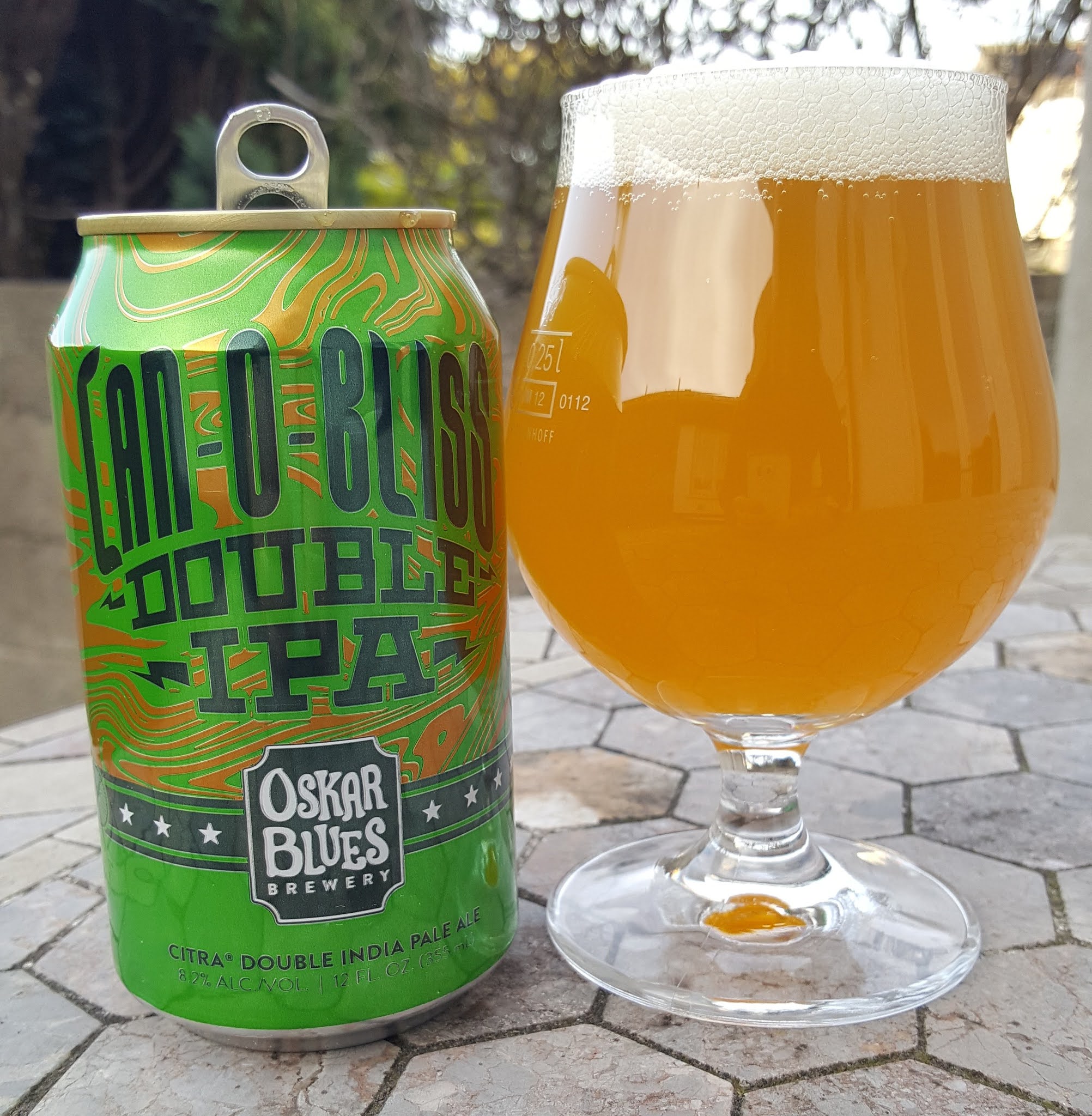
Hagstravaganza sits like a neutron star in Irish beer discourse this summer, bending all conversations towards it, both before and after the event. To say it made an impression on the Irish beer fans is an understatement. Ostensibly, it was a one-day beer festival at the White Hag brewery in Co. Sligo at the end of July, marking the brewery's third anniversary. It built on
last year's gig, expanding the Irish and international beer listing hugely and becoming more like a full-on festival.
Sixty taps were set up along a single long bar in the brewery's open front hall, with an over-arching, if not fully accurate, theme of beers which had never poured in Ireland before. The standard serving measure was a generous 33cl, costing an even more generous €2.50 a throw. Technical problems delayed the kick-off by about half an hour after the advertised start time, but by 2.35pm it was all under way and I had some pretty rapid quaffing to do to get my money's worth before the 6.19 train back to Dublin. I think I managed it.

I had been especially looking forward to trying more beers from White Frontier, the Swiss brewery which poached Galway Bay's former head brewer
Chris. My opener was
Moroccan Gose, the salty-sour German style, embellished with purée'd mango. At 5.5% ABV it's quite big for the style, though presents cheerily: a bright and welcoming orange colour. Malt and fruit take a backseat against a big and invigorating tartness right from the very outset, and all the way through. The fancy
fleur de sel salt also makes a big contribution. And yes, there's mango, but it doesn't interfere with the core gose-ness and it certainly doesn't make the beer sweet. An object lesson in how to do fruited gose well, here.
Freeride World Tour was next, a New England-style pale ale, single-hopped with Citra. I'm sceptical about the use of that hop in low-bitterness styles like this, and here it can't resist pushing out a spiky kick of grapefruit acidity which seems quite out of character. There's lots of custardy vanilla creaminess, however, though almost to the point of sickliness. The Citra is needed to add balance. Overall it's a pretty decent beer, but a far from classic rendering of the New England features.

Last of this lot was
Col des Planches, intriguingly described as a "decoction IPA". Super-smooth and ultra-clean, right? Nope. This is a big beast at 6.8% ABV and tastes downright under-attenuated: sticky with stonefruit flavours like apricot and white plum, while the texture makes it hard going. Not a great beer for someone on the clock.

My favourite feature of international festivals like this is the chance to drink beer from breweries I'd never heard of. There was plenty of opportunity to do that at Hagstravaganza though I didn't get to as many as I'd have liked. Basqueland was one such, and I managed a taste of
No'wray José, an IPA they brewed with Lervig. In contrast to most collaboration beers it was quite a tame affair: 7.2% ABV, smelling of lime and grapefruit, with savoury caraway notes taking over on tasting. And that's about it. It does well to mask the alcohol with its light and approachable texture, though that's the most interesting thing about it.
Parisian brewpub Paname was another stranger, and they brought
Casque d'Or, a saison. It's a perfectly balanced example of the style, lightly funky with a smattering of ripe and luscious apricot on top. Candied ginger is the not-so-secret ingredient, according to the brewery. It seems to have been used sparingly, however, as it's not identifiable and certainly doesn't render the beer sweet.

Another festival benefit is the opportunity to get hold of beer from breweries I
have heard of and want to try. I'd say it's only a matter of time before Berlin's BRLO lands its wares on these shores; in the meantime here was
BRLO Berliner Weisse to be getting on with. And it's an absolute classic: light without being watery at 4% ABV, and showing the dry and crunchy wheat which I associate with Berliner Kindl's example of the style but which is missing in so many contemporary versions. The sourness is quite subtle, presenting no more than a squeeze of lemon juice, and there's a touch of clove rock spicing. There's no messing about here: just classy and uncomplicated session drinking.

Turning to the stronger imports, I nabbed myself a glass of Beavertown's
Heavy Water. This imperial stout has been around for ages in various forms but I'd never taken the time to try it. This one has vanilla, cinnamon and chilli, amongst other things, and gets good use out of it all. Although the aroma is plain and wheaty, there's a multitude of spicy flavours layered on top of each other in the 9.8% ABV black beer. As is the way of these things, cinnamon does dominate a little and it's just as well the base stout is big enough to assert itself against it. It's a bit silly but great fun to drink.

Another established beer that I decided to slake my curiosity about while it was going cheap was Stone's
Double Bastard. After the meh-fest that was
Little Bastard I hadn't exactly been champing at the bit to get hold of it, but here it was and I'm a sucker for completing sets. I made the right choice. While this dark red number smells like any caramelly imperial red or boozy barley wine, there's a fantastic fresh green and bitter hop flavour. This aggressively balances the old-school sticky crystal malt, laid on thick to 11% ABV, and renders the finished product far more drinkable than one might expect. There's a touch of the old exquisitely-balanced Stone magic in this. I had been wondering lately where that had gone.

The Irish guest brewers were afforded one tap apiece. My first Irish beer of the day was Trouble Brewing's grapefruit IPA which has subsequently been formally named
The Grapefruit Express. It's an enigmatic dark amber colour. Though over the 5% ABV mark, the texture is a little bit thin, although a certain degree of malt character is evidenced in the biscuity foretaste. The protagonist of the flavour is a big acidic bitterness, though it's something I would attribute far more to the hops than the fruit: this is definitely an IPA first, and there's a resinous dankness which definitely didn't fall off a grapefruit tree. Grapefruit pale ales are everywhere these days but this is the most serious and IPA-like I've encountered, and I think it's a better beer for that.
YellowBelly's contribution was
Last Rye'ts, a simple saison, albeit a strong one at 6% ABV, with a perfumed mix of jasmine, honeysuckle and similar garden flowers. It's surprisingly clean and quenching, given that strength.

There was a novelty from Eight Degrees:
Elder Veisse, the first Irish beer to be brewed using traditional Norwegian
kveik yeast. Unsurprisingly, yeast features big in the resulting flavour profile: savoury to begin, then launching a sharp and bitter bite. The texture is beautiful, though: all soft and fluffy, and I'm guessing that's the yeast's work too. The inclusion of elderflower adds a pleasant balancing sweetness, and there's a proper hop character as well. It's a highly interesting beer, and one I'd like to have had time to explore further. Suffice it to say that the
kviek experiment is worth pursuing.
Two Brett beers to round this lot off. Kinnegar had a new iteration of their highly-regarded -bucket series with
Phunk Bucket. I assume this is just Rustbucket with the Brett thrown in? Either way it works wonderfully. Despite the name there's very little by way of funk in it. There is, however, a gorgeous soft and mouthwatering melon flavour, fresh and clean, and a long way from the farmyard. It takes a surprise turn at the end, finishing dry, with even a touch of lambic-like nitre. This beer is end-to-end brilliance and I hope there's plenty more of it to go around.

But even it was upstaged by the best beer of the day. Naturally, our hosts had a full selection of their own beers on tap, though there was just one new one:
Olcan. This is a barrel-aged Brett-infused IPA of 5.6% ABV. The foretaste is, unusally, coconut, and this is followed by perfume-spiced sandalwood and sharp lemon spritz. There's a bit of funk about it, but it interacts with the other flavours and blends to a complex and harmonious whole. Here too there's the nitre brick sour dryness in the finish, but it's much more part of the flavour than with the Kinnegar one. I'd argue that this is the closest thing to real lambic that any Irish producer has yet released, and even sails close to being a substitute for it. Olcan was created as part of White Hag's barrel ageing programme, which is still in its infancy. On this showing there's very definite promise there.

With the evening upon us I was packing up and getting ready to move out when
Paul produced a can of
Heady Topper, one of those influential beers it's wise to taste in the event of some passing your way. It looks like a million other New England-style IPAs: a pale hazy yellow with little effort at a head. There's a strongly dank funk for an aroma, while there seems to be a lot of residual sugar left after it fermented to 8% ABV, leaving it thick and surprisingly sweet. The hops eschew fruit flavour for burning alium acidity, like chomping on a freshly peeled clove of garlic. This fades to caraway, though the big mouthfeel means it never quite leaves the palate. It's quite an intense experience, and an enjoyable one too. Like other archetypal beers, thinking of Pliny the Elder in particular, it doesn't taste all that different from the many competent attempts at mimicking it, though the quality and intensity do make clear why other brewers are trying. Cheers Paul!
It'll be interesting to see where Hagstravaganza goes next. I think the guys have hit on a winning formula, and just a few tweaks -- toilets, payments, drinking water -- would perfect it. Or perhaps they'll reformulate the whole thing once again. One thing's for sure: people will be talking about the 2018 event before the buzz about this year's has even faded away.



 Through the latter half of last year I found myself accumulating an array of beers from New Belgium and then omitting to actually drink them. When the multiple Voodoo Ranger variants arrived, this began looking more like a challenge than a leisure activity. It was only towards the end of the Christmas break, with stocks running down in the beer fridge, that I eventually began tackling them.
 And with that, bring on the Rangers! Four of them, starting back in time with Voodoo Ranger 1985. It's 6.7% ABV and hazy, like IPAs in 1985 weren't, and my heart sank a little when I read "mango flavor & spice" on the side of the can. It smells like a witbier, which is a perfectly acceptable use of spice in beer, I guess, and with that idea planted, I realised it looked like one too: pale yellow with a fine and fluffy froth on top. First impressions on tasting were, well, unimpressed. The spices are muted, and there's no IPA hop kick. The fluffy creamy texture is pleasant, but there's a gap where the foretaste should be. After a while, the mango emerges, sweet and syrupy, and then a trace of the Belgian herbs and spices: coriander, cardamom and ginger. But that's your lot. It's underwhelming as an IPA, as a gimmick, and as a beer. I will admit it was a couple of weeks past the best before, but if I've missed anything through neglect it must have been damn subtle in the first place. A big nope on 1985, then. What were they thinking?
 "American Haze" is the codename on the next Ranger, this one a mere 5% ABV and lacking daft ingredients. It is hazy as promised, an opaque pale orange. I didn't get much of an aroma from it -- elderly can problems again? -- but what was there seemed quite savoury, and a little dreggy. With haze comes sweetness, and this tastes like orangeade, nicely zingy and refreshing; sweet but light with it. In contrast to that half-aroma, it's perfectly clean-tasting with no murky twangs. Any issues with freshness have not affected the flavour unduly because it's still absolutely vibrant. It's an accessible and fun number, unlikely to impress any Heady Topper fans, but none of them have much of a sense of fun anyway.
 More haze please, but bigger! That lands me Higher Plane, an 8.5% ABV "hazy imperial IPA". It looks a little deeper-coloured in the glass, with an almost Tequila Sunrise effect: red at the base and bright orange towards the top. Again not much aroma, and this one is a couple of months fresher than the previous. There's a mineral dryness on the nose, but little else. The first sip brought booze, and lots of it. I got a sort of Duvel sense at the outset: that alcoholic grain-and-honey vibe. Fruity peach and apricot liqueur chase that, before a hot and slightly acrid bitterness escort it down the throat. It's a bit odd, and quite extreme, though not without charm. Overall, I found it a smidge too hot and sickly to be properly enjoyable. I'm beginning to think these Voodoo Rangers have little in common with each other, beyond their totemic can skeleton.
 Last up, no haze, just Voodoo Ranger Imperial IPA, presumably one of the earlier brand extensions. This one is the full 9% ABV and resembles American double IPAs when I first drank them: that perfect clear amber colour with a rich aroma, full of alcohol and citrus. That said it's surprisingly unbitter. In keeping with the style specs, there's lots of malt, and the hop side isn't quite strong enough to balance the sticky sugar from that. What you get instead is a gentle buzz of non-shred marmalade or orange jelly. It finishes quickly and unobtrusively, which I'm taking as a good thing. I doubt even 2008-me would be all that impressed with this. While inoffensive, it's lacking that loud American punch that made beers of this sort so exciting in the first place.