01 February 2023

Old haunts

"The less gimmicky beers will have to wait for my next visit" I wrote after drinking hemp beer, chilli beer, rauchbier and whatnot in 7 Stern on my last visit to Vienna in 2011. The place hasn't changed much since then, nor since my first time there in 2003. I suspect the fundamentals have been the same since this vast rambling premises opened its doors in 1994. It's a sound formula and there's no need to change it. The chilli beer still tastes amazing, but less gimmicky I promised, so less gimmicky I will review.

Wiener Helles is your typical brewpub kellerbier, 4.9% ABV and hazy yellow. Beginning from a very dry, almost acrid, base, it adds unsubtle perfumed hops, ramping up the bitterness as it goes. The experience is jarring, the overall flavour rough and jagged, its malt and hop elements not really melding well together. Taken together it's quite the opposite of what I look for in the beer at the top of a brewpub menu list. 7 Stern's fondness for the weird stuff leaking through inappropriately, perhaps.

I had better luck with 7 Stern Dunkles. Though only 4.9% ABV, this is a big fellow. Heaps of dark unctuous molasses is suggested by the aroma, followed by dense treacly goodness as the flavour. A vaguely herbal cola-nut bite is the only nod to complexity. But this one doesn't need complexity. It's made for chewing through and then ordering another. I wasn't there to do that but appreciate the use case nonetheless.

1516 is another 20+-year veteran of Vienna brewing, and still at it, still brewing its licensed clone of Victory Hop Devil, though the pub is now wonderfully smoke-free. I opted for something called Kimber Ale, described as being Alt-like. It looks the part: deep brown with a lagery foam on top. The foretaste is slightly roasty, giving it a porterish character. The crisp middle and caramel finish bring us back to Alt. It's fine, not very exciting, and strong for what it is at 5.2% ABV. This is another one designed for drinking, not analysis.

I figured the Dubbel Winter Ale would have more to say for itself, brewed as it is with fig, plum and cinnamon. This is a deep garnet shade and smells somewhere between a Christmas cake and a mince pie: currants and brown sugar, with a late pinch of clove spicing. For all that, it's still a bit thin and I don't think the base dubbel is up to Belgian standard, making it seem like the fruit and spices are there to cover up its shortcomings. The discussion on whether to stay for a second round was a brief one, and off we went.

While I had been back to both of these since 2003, one place from that trip I hadn't revisited was Fischerbräu. I recall drinking in the twilight of a crowded beer garden so it was a different experience late on a January afternoon, the outside space deserted and only a few of the tables inside the small inn occupied. Still, they fry a good schnitzel, and the beer...

Just two on the taps. Fischerbräu Helles is a dun hazy yellow and tastes a bit... unfinished. There's a dense malt weight and a porridgey sweetness. It's hearty fare, loading you up with honey and brown sugar, but it doesn't resemble what I understand as Helles, as was the case at 7 Stern. Maybe German brewpubs have spoiled me for Austria.

The other one was Meistertrunk: 6% ABV and red-brown, so I'm guessing some class of a winter bock. This one is also weighty but suits it better than the Helles. The flavour delivers caramel and marzipan, but in a clean way, finishing with a proper noble-hop leafy bitterness and a twist of black pepper. It's interesting and also fun, very well suited to sipping and exploring slowly.

Vienna certainly has no shortage of brewpubs and I got to try a few that were new to me as well. They'll be covered in tomorrow's post.

31 January 2023

Craftbier an der Donau

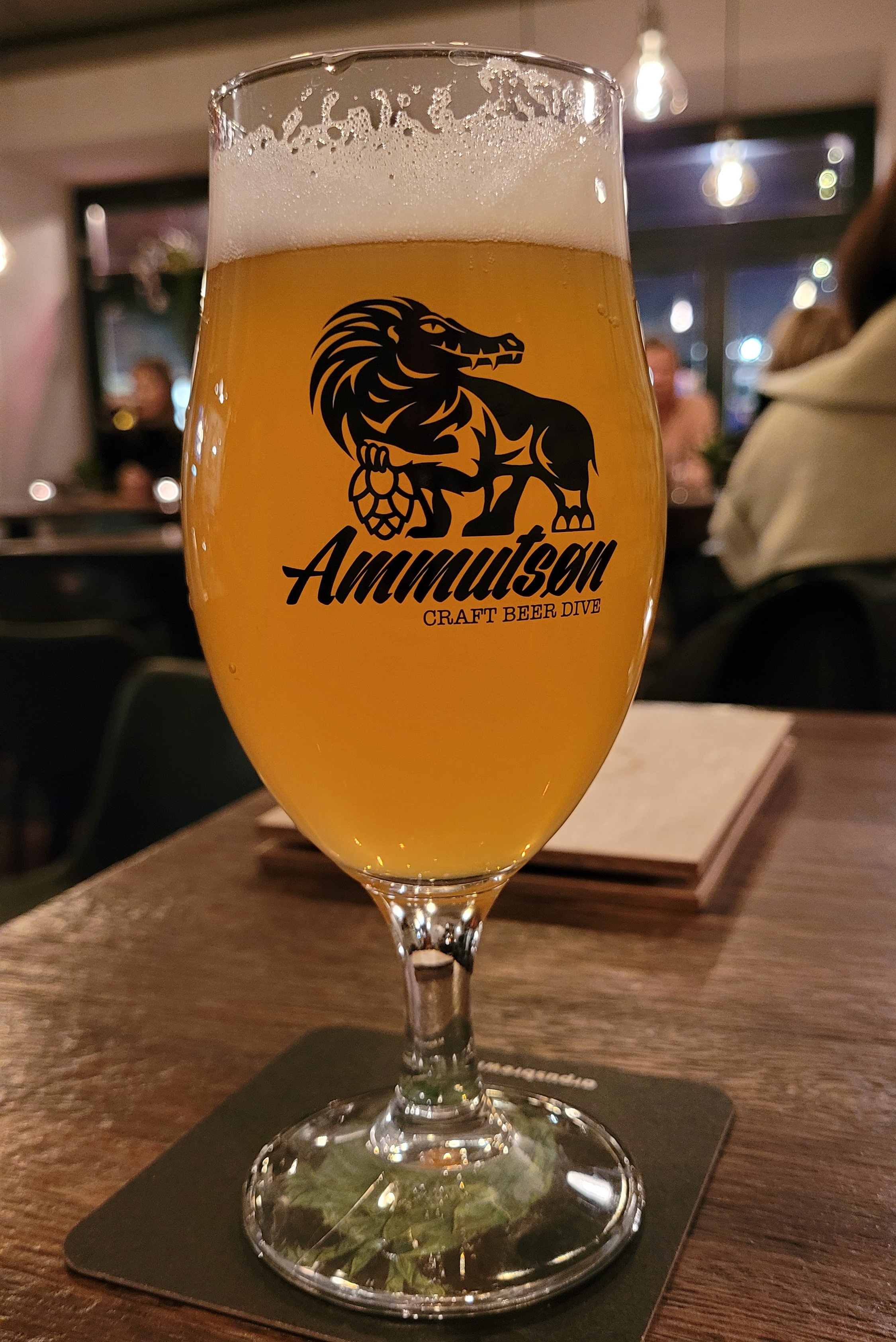
Unsurprisingly, the modern trend for off-kilter beers has reached Vienna too, and barwise it's centred on Ammutsøn, a self-described "craft beer dive" but really a pleasant little bar with two poky rooms and an ever-changing array of local and international beers on tap.

I went international to start, picking Pina Colada, a fruited sour job by Lithuanian brewery Sakiškių Alus. A small glass of this 6.2% ABV one cost a handsome €6.75. Was it worth it? Not really. It fulfils the promise of the name, smelling and tasting strongly of both coconut and pineapple, with a creamy texture. The most surprising feature is the lack of murk, presenting clear and golden in the glass. While an accurate recreation of the cocktail in beer form it's not very beery and certainly isn't even remotely sour. That makes it pretty basic -- drinkable, enjoyable for a few sips, but really not very exciting beyond that. When ordering beers like this in places like this for that sort of money I expect something more interesting.

For my second I decided to stay relatively local, with one from Bierol, a brewery up north in the Tyrol. It's another fruity sour beer, this time with IPA in the mix too, called MK Ultra Mandarine. The aroma was a pleasant surprise: all musky and spicy, sandalwood and cedar, like aftershave or manly shower gel. Although quite light-bodied, there's a greasy texture and lots of booze heat, showing off its 7.4% ABV and more. The flavour is funky, but again in that lockerroom cosmetics way rather than farmyard. There's also herbal lemonade and a vanilla sweetness but none of the zesty mandarin I was expecting from the name. Still, it's a fun one, with new dimensions unfolding with each sip. I could ding it for being a little unbeery but the flavour at least makes up for that by being so multifaceted. It's perfectly acceptable fare and I'd like to find out what else this lot have been brewing.

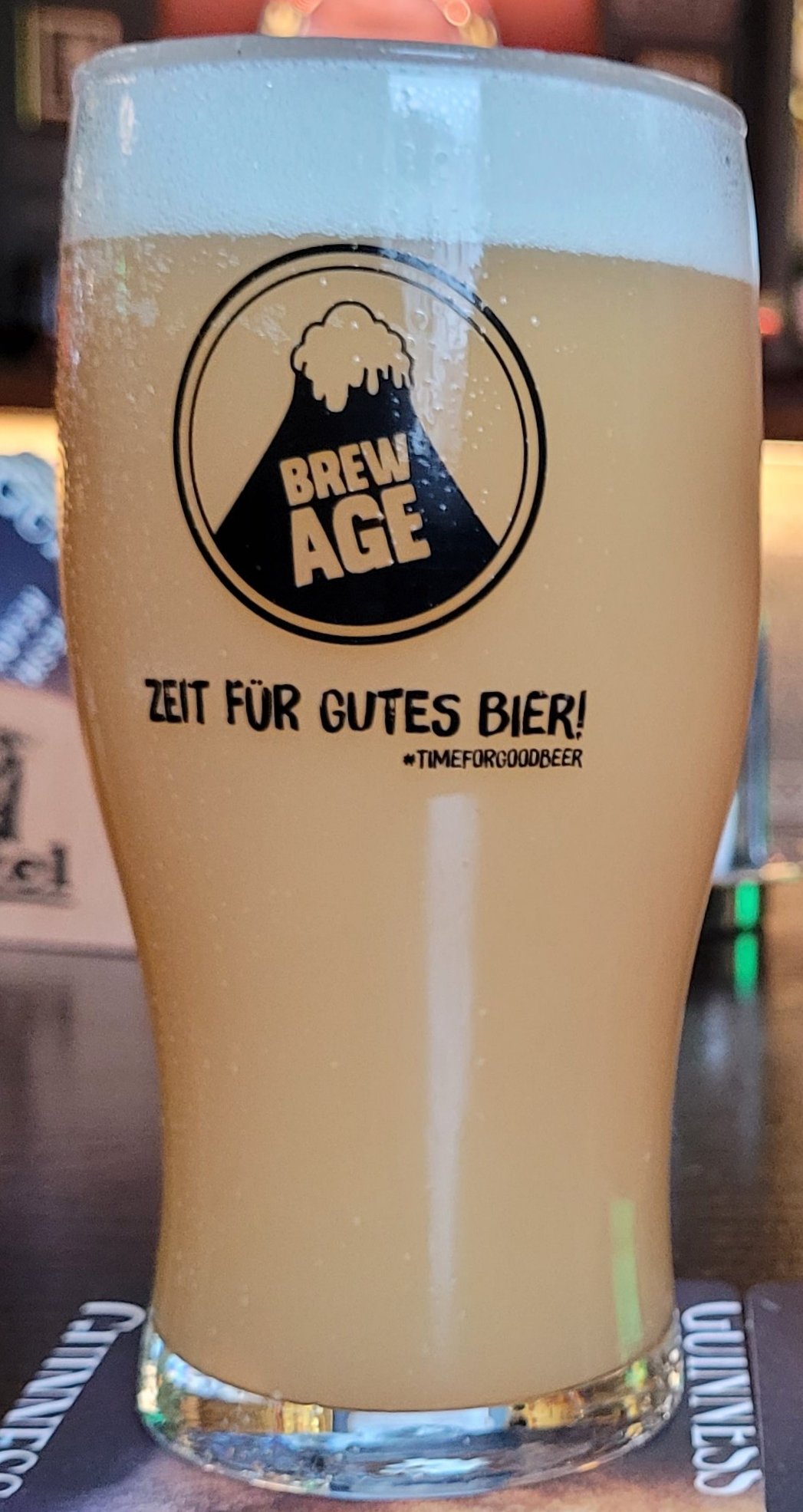
Seemingly the most mainstream craft brewery in these parts is Brew Age and I saw their Alphatier IPA on tap in several "normal" bars and restaurants. It's 5.6% ABV and a disturbing beige colour. Thankfully it tastes nowhere near as dreggy as it looks, offering a clean and juicy flavour, big on sweet mandarin up front before adding a citric bite to the finish. There's a smidge of garlic and grit, but not to an offensive degree. Overall it's very well done and makes a good ambassador for Austrian New England-style IPA.

The next two I picked up as a matching pair at BeerLovers, a proper Aladdin's cave of an off licence. Both are from Brauhaus Gusswork in Salzberg. The first is a 5% ABV stout called Das Schwarze Schaf and is ostensibly dry -- lots of toasty roast to the fore -- but balances it beautifully with a richer chocolate middle. There's even a touch of cherry or raisin, something I would normally expect only to find in much stronger and thicker affairs. Because we have loads of them at home, I sometimes forget how rare session-strength stouts are abroad. These guys have really put the effort into making theirs a good one.

For something stronger, and hopefully along similar lines, there's Die Schwarze Kuh at 9.2% ABV. This does has the same basic dryness but the flavour heads off in a different direction otherwise, going big on the bitterness for strong kicks of liquorice, marjoram and boiled green cabbage. It's serious, but no less enjoyable for that. Though it's not exactly unctuous, there's a certain creaminess to the texture, keeping the carbonation at bay. Overall another very well made stout; not as accessible as the above, though I'm sure it isn't supposed to be. (edit: Barry tells me the Gusswork brewer studied at UCC and worked at Beamish & Crawford. Strange that his stouts are so good then, eh?)

Finally, I don't go past hemp beer when I see it and I saw one on the menu at the Kaltenhauser Botschaft beer hall, about which more later. Brau Schneider is the brewery and the beer is called, simply, Hanf. It's 5.3% ABV and warm fermented, presenting a clear pale yellow. The aroma is lightly citric, coming from a crisp lagerlike body. The flavour isn't very strong but does have the white pepper spice I enjoy in hemp beers. I would have preferred much more of that, though even the little bit was nice to get, it's such a rarity. More peppery hemp beers, please.

Fancy craft isn't really Vienna's thing, and the more traditional styles are far more commonplace. It's there if you look, however. Tomorrow we'll begin exploring the city's many brewpubs.

30 January 2023

Waltzing back in

After a two-year hiatus, New Year trips are back on the agenda. Vienna, as a city that puts a lot of effort into celebrating the event, had been high on my list for a while. And it didn't disappoint: there was a proper party atmosphere in the streets, lots of live entertainment, hot wine and no drunken idiots with explosives. All good clean Teutonic fun.

My first Vienna lager on arrival was Ottakringer Original, one of the mainstream brands but one I've quite possibly never had before. The brewery, not far from where we were staying, is a large independent, competing mostly with Heineken's local brands. The beer is a beautiful copper colour and given plenty of body from its 5.3% ABV. Its flavour opens on the rich melanoidins which I associate most with the style, but cleans that sweet side quickly, leading to a drier and crisper finish. There's a tiny peep of grassy noble hops at the end, making it clear that the malt doesn't get everything its own way. I liked it, finding it characterful yet accessible. I deem it a perfectly acceptable industrial flagship for the city and the beer style it gave the world.

There's another copper-coloured lager in the range: Ottakringer Zwickl Rot, though because it's unfiltered it presents more as a muddy brown than shiny metal. I found it on draught in The Long Hall, a modern and airy Irish pub with pleasingly minimal paddywhack trappings. It tastes nowhere near as dirty as it looks, delivering a burst of sweet caramel up front, leading swiftly to a perfectly clean lager finish. It's not very exciting or complex, but it's 5.2% ABV so provides a merry buzz with minimal effort. Another essential service from the local bigboy. 

At the opposite end of the trip I finally found a pub with its brandmate Ottakringer Helles on tap, which promptly ran dry when I ordered it so I ended up paying over the odds at the airport shop to complete the set. It's surprisingly good for something that has been sitting in a green glass bottle in an airport fridge: not a trace of skunking. There's not much hopping in general, mind. It's plain, broadly sweet, and has a touch of the plasticky tang that I associate with hop extract in industrial beers from this part of the world. As a refreshing pint of lager which needs serve no other purpose, it's fine. Little asked and little offered. Original is the one to go for of these three.

Big O doesn't have the Vienna lager market to itself. I also found Hirter 1270 from Privatbrauerei Hirt, claiming to be the oldest in the country. I can't be too angry with their marketing bullshit because the beer is lovely: much darker and sweeter than I would expected from a Vienna lager, with overtones of Czech tmavý, I thought. There's runny caramel with a burnt edge plus wafts of floral pipe tobacco and no real bitterness. Like many a Czech dark lager it runs the risk of turning overly sweet but just manages to avoid it. While it's not what I thought I was in for, this one is very enjoyable.

Of course, all the mainstream Germanic beer styles are well represented in the beers available in Vienna. At one point we found ourselves in a branch of Centimetre, a small chain of restaurants that seems to specialise in massive portions of meat and carbs, served by the wheelbarrow if you like. Tragically, it wasn't dinnertime, so just a couple of beers then.

For me, Stiegl's Bio-Bock, russet coloured and a bock to its bones, syrupy of texture, sticky-sweet in the foretaste, followed by a hard green bitterness, laying on cabbage and spinach in a way that feels like it should be good for you. Thankfully it finishes quickly so the sugar doesn't cloy but I still found it hard work to get through. I occasionally feel guilty about not really liking bock, and make a point of calibrating my palate when occasions like this arise. I definitely still don't like bock.

For m'lady, a dunkel. Specifically Hofbräuhaus Traunstein Dunkel, imported from a small town just over the border in Bavaria. It's brown and a little bit murky, smelling of vegetal noble hops but giving the dark malt free rein in the flavour for notes of soft caramel and spicy cola. It's beautifully smooth and poised, balancing its dominant sweet and recessive bitter sides very well. There's a comforting wholesome warmth about it as well, suited to the fake-ski-lodge vibe of Centimetre.

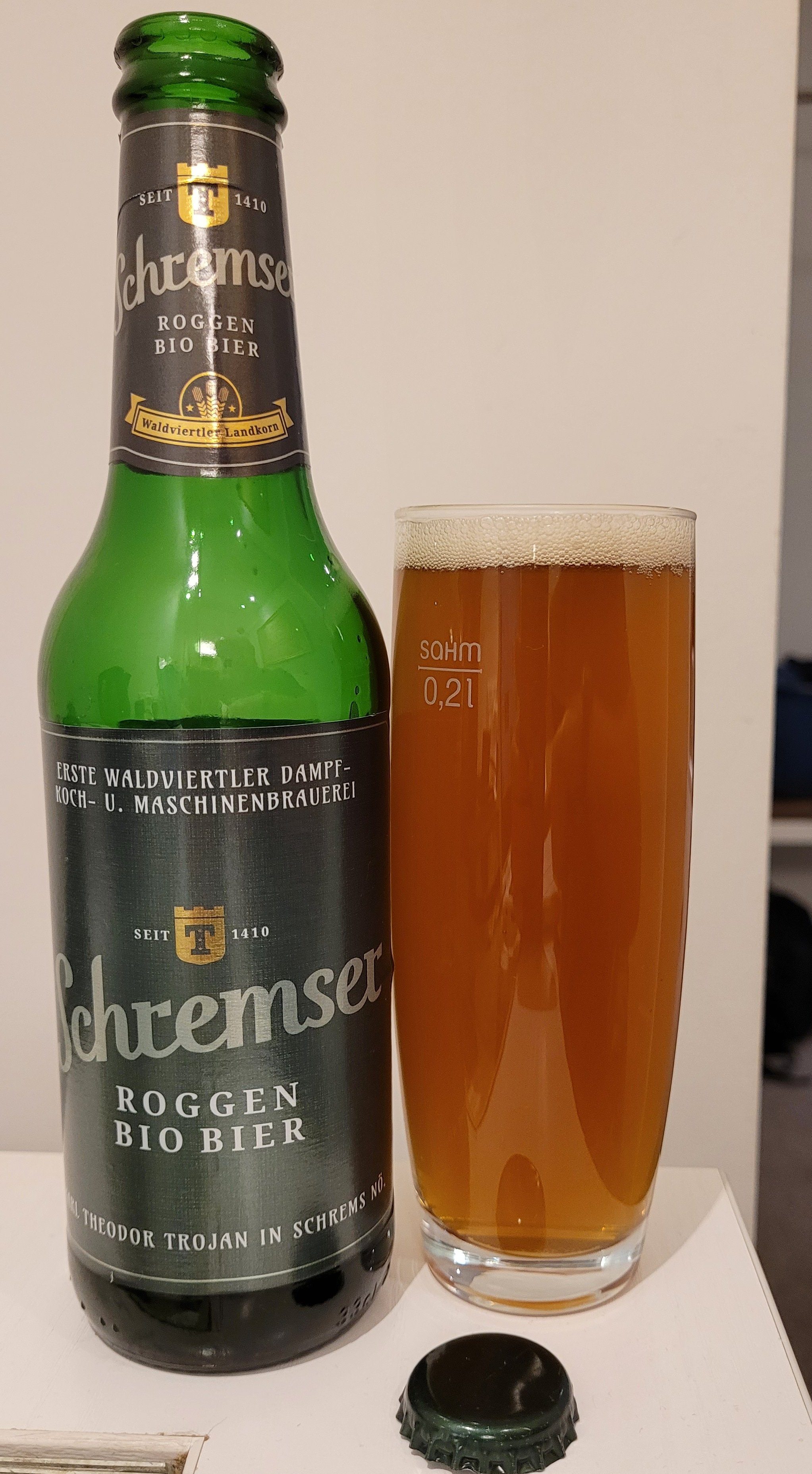
I bought Schremser Roggen randomly from a Spar, though if I'd noticed the green glass or two-weeks-ago expiration date I might not have. It looks rye-ish enough, being murky and amber coloured. 5.2% is the ABV. There's a touch of skunkiness in the aroma, and also a very Belgian mix of farmyard funk and stonefruit esters. A glance at the label tells me it's warm-fermented, and I would say very warm indeed. It gets even sweeter on tasting, piling in unfermented wort and concentrated honey, plus the kind of buttery popcorn effect one gets from very sweet weissbier. There's absolutely no sign of rye's bittering or drying qualities, only a pinch of damp grass in the finish. This isn't at all what I though I would be getting, and I'm not sure that the age is a factor in what went wrong. Who is buying a rye beer and is then pleased when it's monstrously sweet?

Heineken does need to get a word in before we leave, and here's their ubiquitous Edelwiss, sampled at the airport on the way home. It's pale and surprisingly clear, perhaps because it was on keg rather than bottled, rolled and poured as it would be in more civilised surroundings. It's a very sweet example of a weissbier, adding oodles of toffee to the already jangling banana. That's the lane it picks and where it stays, offering no further complexity. Your tongue would need to be hanging out for a weissbier to pick this one, but then it probably doesn't get served in many places where choice is an option. Thanks again, Heineken.

That's the basics covered. but Vienna has much else to offer the more adventurous beer drinker. We'll start taking a look at that tomorrow.

27 January 2023

Tick, tick... Brum!

The first international trip covered on this blog, indeed the one that prompted me to actually get it started, was to Birmingham. I hadn't been back since, which rankled especially since I had missed the city's longtime Real Ale haven The Wellington. An unplanned layover in the city after Christmas gave me a few hours to right that particular wrong, and do a little bit of updating on my Birmingham beer geography.

The selection at The Wellington is indeed impressive, and the first one that caught my eye was Thai-Bo by Welsh brewer Coach House. Old lags may remember this as produced by the much-missed Otley brewery. Nick Otley gets a shout-out on the pumpclip, though not the collaborator on the original, Melissa Cole. I never got to try it first time around so wasn't going to pass up this second chance.

It's 4.6% ABV and ostensibly a wheat beer, spiced up to resemble a Thai curry. There's a pleasing light dusting of coconut, very much savoury here rather than the Bounty effect you get in stouts. There's a zestiness which I took for something like satsuma at first, before twigging that of course it's lemongrass. Although the flavour pulls in lots of different directions, and it's very much a novelty job, losing sight of the base beer, it's a fun one. Served cool and cask-conditioned it slips back very smoothly. Nice.

The house beers are from Black Country ales in Kingswinford and there's a mild, so that had to be done. It's called Pig on the Wall and is a hefty fellow for the style, I think, being 4.3% ABV. In the glass it's dark ruby rather than black, with an even and lasting head on top. The flavour is a little sweeter than I like my mild, emphasising plummy forest fruit but missing any balancing roasted dryness. Instead there's a sticky burnt-caramel effect, one which lingers longer on the palate than was welcome. I guess it prevents the beer from seeming watery, and it does taste and feel full and wholesome. But I like my mild with roast and I'm too old to change that now. Regardless, I was delighted to get to try another example of this rare style.

Then I went around the corner to The Colmore where they were serving two more of them. The Colmore is a Thornbridge/Pivovar joint, so the list leans heavily on Thornbridge and the Tap beers. It's an impressive space too, all pale oak and high ceilings, like the lobby of a posh alpine hotel.

Mild number one here was Knäck, a 4%-er. This is very black and, oh hello roast. The fruit is missing and, as I suspected would happen from the previous example, it's thin and a little watery. That's not to say it's bad -- not at all -- it's just different and much more to-style when I think of mild. What was interesting (to me) was that this lighter and drier sort of mild is not necessarily more drinkable than the thicker and sweeter one. I would be hard pressed to decide which is best if faced by them both in a competition. Thornbridge's is more what I would deem typical, but I think the forest fruit of the Black Country one is an important enough component of the whole picture that that's my favourite. There's still plenty of flavour in Knäck and I really enjoyed my pint of it.

The second is a different proposition altogether. Wilder's Folly is 6.5% ABV so belonging to that sub-genre of strong dark milds, of which Sarah Hughes is perhaps the modern archetype. It's black, again, and still dry and roasty. There's a stout-like creaminess to the texture but also a hint of the forest fruit that mild does best. While it's fine, and I recognise the historicity and all that there, for a dark beer at this strength it doesn't really have the complexity and richness that I'm after. Without quaffable drinkability, something as subtle as dark mild isn't a viable proposition. Up the fruit and make it sippable, Thornbridge. Then we'll talk.

Enough tradition. Next stop was the thoroughly-modern Tilt, a pinball bar with a very fashion-conscious beer list. There wasn't much of interest. I settled for Plan Bee, a honey Scotch ale from Pope's Yard multiplied by Simple Things. Yeah, me neither. What I got for my £5.50 was a muddy brown half pint which did smell strongly of actual honey, though not much else. I feared it would be a mucky mess but there's quite a clean profile on the go here, honey and candy, plus the ghost of some Highland toffee that's been largely fermented out. It doesn't really fit the "wee heavy" profile very well: there should be more sweetness and a much weightier body. The guy at the next table had a plait in his goatee, so I guess there's that.


Thank you to everyone who responded to my request for Birmingham recommendations with Tilt. I'm glad I've seen it, but I won't be sending anyone this way myself.

A quick one in the vicinity of New Street station was Merry Brummie by Birmingham Brewing, a spiced rye ale pouring at Cherry Red, more a café than a pub, but with cask. It's a dun brown colour and smells of mince pies and Christmas pudding. The spicing isn't excessive in the flavour but there's not much else going on. The texture is thin and it delivers an unbeery incense or bath salts vibe. I get what they're trying to do but the thinness spoils any festive qualities: too spiced to be sessionable; too weak to be sipped merrily. Even at 4.7% ABV there are better ways to do this.

And so to the airport. There was just one beer new to me at the Wetherspoon: Greene King Fireside. I wasn't expecting much. Yep, it's brown and though not twiggy as such it has an olde worlde character, tasting predominantly of gooey liquorice and old fashioned toffee. I see where they're coming from: there are dark burnt sugar qualities which do indeed suggest fireside drinking.

I was quite pleased to have got this much done in the few hours I had available. It was particularly heartening to see mild in such rude health. December is a much better month than May for promoting and celebrating it.

26 January 2023

My kinda haze craze

A surprise Christmas present was a Rothaus beer I'd never had before: Schwarzwald Zäpfle Naturtrüb, the unfiltered version of their flagship lager. The brewery has quite a cult following but I've never really seen the particular attraction of it: lots of breweries do traditional German styles very well.

I'm making a stand-out point for this one, however. Yes I have tasted unfiltered German lager very like it before, but always in Germany and on draught. Rothaus appears to have mastered the art of bottling the wholesome freshness and shipping it abroad. It's the hazy yellow of a witbier and that's probably the reason I got fresh zesty lemon as the first flavour. Behind it there's crisp cracker and sweeter fruit: apricot and melon. It's bright and sunny in a way that German lager normally isn't.

They call these "fir cones" when packaged in 33cl because of the bottle shape. I've seen nothing to indicate whether or not this exists in larger measures but it absolutely should.

25 January 2023

Exploring the Outback

The Way Outback brewery of Dorset came recommended, and gifted, by my niece who lives down that way. Everyday beers in cans; fancy stuff in bottles: seems eminently sensible.

At the lower of the scale is Working Like a Dog, described as a session pale ale and very session indeed at 3.6% ABV. They've loaded it up with hops, which was perhaps risky in something this strength, but they've got away with it. The secret is in the choice: I can't imagine any beer being overpowered by Mosaic or Hallertau Blanc, providing as they do a lusciously soft tropical vibe, here dialled up to Lilt levels. For balance it's Kiwi variety Taiheke providing a nicely sharp citric bitterness. The body holds up very well given the low gravity and I would never have guessed it's as weak as it is.

Take Me To Valhalla should have been a step up, being 4% ABV and a deeper golden colour. It's single-hopped with Mosaic too, and the brewery seems to know what they're doing with that. So I'm at a loss to explain why this one was altogether thinner and duller than the previous, and the Mosaic has that grainy caraway seed effect which I don't care for. The thinness and small-can format do at least mean it didn't hang around long and I was straight along to beer three.

That was Hey You Guys and it's a New England-style pale ale at 4.6% ABV. Haze check: yes, it is -- a murky orange rather than murky yellow. It has the texture correct, all marshmallow soft, but the flavour is a little off, being sharply lime citrus rather than juicy or sweet. It's a bit of a jarring contrast, and there's a dry rasp on the end which doesn't improve matters. This is a mixed bag, then. Not bad, but not fully on par either. If you'd never had a hazy IPA before you might be impressed. Jaded old hacks like me expect better these days, however.

The cans top out on another hazy one, this time at 4.8% ABV and more of an on-the-money paleness. This is Feel The Rhythm, hopped with Idaho 7, Motueka and Nelson Sauvin. It's another sharp one but there's a juicy side too, or possibly cordial: sweet and orangey anyway, with a side of mild vanilla. Then there's sharp grass and burning diesel, jaffa pith and a pinch of grapefruit. It's quite busy and the bitterness is again a little unorthodox, but here it all works, and you get good value out of the Nelson.

Along we go to the fancier stuff, beginning with The Deep South, a 7.5% ABV doppelbock which takes its name from the 10 months of ageing in bourbon barrels. It's a dark brown colour and enthusiastically fizzy, running the risk of gushing after the cap came off. Presumably a very clean lager at the outset, the bourbon element is huge, packing vanilla into the aroma, becoming a richer and sweeter crème brûlée on tasting. That leaves a lasting tang of buttery vanilla as the aftertaste. On a cold winter's night I quite enjoyed the warmth of it, but it's a beer where you really need to appreciate the oaked-up American whisky effect. I was already finding it cloying and difficult before I reached the half way point of 33cl. Maybe doppelbock wasn't the best choice of style for the intensive bourbon treatment.

Finally we have the delightfully named Bimbling Along, a saison with added honey and aged in gin barrels. It's an unlikely combination and one I'm sure the brewery didn't choose arbitrarily. The result is 8.6% ABV and again the carbonation is rather higher than one might hope for. The colour is honey and so is the aroma: strong and concentrated; smelling intensely sweet in a way that saison never does. Saison's dryness and peppery spice is present in the flavour, which is a mercy, although it's somewhat obscured by the honey. While the beer isn't exactly sweet, there's a lot of floral honey flavour, giving a powerful impression of honey without any of the accompanying stickiness. I don't really get the gin barrel's contribution, and wonder if it might be subsumed into the floral side. Overall, it's a very odd beer, and one built for sipping and contemplating. I think it does work, however, and is actually enjoyable, showing both its saison and honey sides clearly without making them fight each other. That can't be easy.

I think Way Outback may actually be bimbling along as a brewery. There are signs of excellence here, but a few missteps too.

23 January 2023

The advent of craft

I caught some flack a few years ago by complaining that the town of Shrewsbury lacks craft beer, and while it's well supplied with the traditional stuff in cask and bottle, it's useless as a destination to find out about trendy, murky, contemporary British brewing. I visited again over Christmas and discovered that, perhaps inevitably, craft has reached Shrewsbury. It's in the form of Tap and Can, a pub beside the station in the familiar hardwood-furnished pseudo-dive craft vernacular. Still, there's a decent cask offering among the kegs and cans, and that's what interested me.

I opened on Mini Milk, a milk stout from Arbor Ales of Bristol. The aroma is surprisingly roasty here, packed with coffee grounds and almost smelling burnt. Still, as hoped, it's lovely and smooth with a flavour which piles in the milk chocolate and complements it with a salt/sweet caramel complexity. The burnt bite returns in the finish, adding a little balance. Overall, this is exactly what I think milk stout ought to be, tasting wholesome and nourishing, the whole picture enhanced by the cask serve.

Morbid curiosity got me to order a half of Terra Firma from Birmingham's GlassHouse. From the modern art pumpclip this is very much craft, and came in a stemless wine glass, murky as you like. The vital statistics are that it's a pale ale of 4% ABV and utilises Simcoe and Idaho 7, and presumably has been absolutely saturated in them. The aroma is massively dank, which is quite discombobulating for an English cask ale, while the flavour has the same caraway crispness as many a canned hazy IPA, along with fresh lime rind and a hint of vanilla. I wasn't mad about it but did find it fascinating: a great effort at bringing the high-end hop fireworks of American haze to the cask drinker. I wonder what they make of it?

Meanwhile, out in the country, the local had reduced its hours of operation though still kept three beers on cask and as usual there was something new for me to try. This time it was Butcombe's Chris Moose seasonal beer, a long way from its West Country home turf. I wasn't expecting much, given the cartoonish pumpclip, but this turned out to be quite thoughtfully put together. Though very brown, it's not twiggy or cloyingly sweet, presenting predominantly dry. The flavour does suggest Christmas without going gimmicky, showing currants and chocolate on a base of black tea. It was much more drinkable than I thought it would be: 4.1% ABV is a modest strength, but English winter beers can still be horribly sticky at this level. This one, however, is clean and quenching, and would work perfectly well for a session.

Not for me though. I switched next to the house lager, 1985 from the usually-reliable Wye Valley brewery. I think they're going for a niche with this guy, however: a classic interpretation of continental lager it is not. Good enough for mainstream English lager drinkers it seems to be. Crispness is the principal feature, and I'm sure that's deliberate. It came served in a Carling glass with a head keeper, and as usual with smaller-batch beers that meant a very busy fizz. Under the dry carbonic bite there's a wonky fruity side, the sort of thing that adds character to an ale but just tastes wrong here. This just about fills the intended niche but Augustiner and Budvar needn't be worried about Wye Valley stealing their thunder.

Snowdonia Ale is from the generally reliable Purple Moose. It's intended as a thirst quencher, being a golden ale of just 3.6% ABV. Served cold from the garage on Christmas Eve it was perfect rehydration fare after a few hours of drying out by the fire. It's crystalline lager gold and very lemony, seemingly making great use of American hops without losing sight of traditional British drinkability. I'm sure, like many a bottled ale of this sort, it's meant to be a second-rate substitute for a cask version, but I can't imagine this being more effective at a higher temperature with less fizz. For my part I quaffed through it in short order and felt all the better for it. It seems that 2008 me didn't enjoy it, but what would that guy know?

Ridgeway Brewing is one of those English breweries I never see much of in England, and I suspect a lot of their output gets sent straight to export. So it was a surprise when a family member sourced this bottle of Reindeer's Revolt as a gift. The label suggests its intended destination was Finland. "English Christmas Ale" it proclaims, and the only other beer of that sort I can think of is the one Shepherd Neame does. Like it, this is a deep golden colour and quite strong at 6% ABV. With that comes a lot of winter warmth and a candy sugar sweetness, suggesting the base for something seasonal which hasn't had the fruit and spices added yet. A tiny tang of orange peel is the only nod towards complexity. It's a little sticky and cloying, and I would suggest taking time over it, if it tasted better. For my part it was a race to get through a half litre while it was still cold, because I reckon it would be undrinkable at cellar temperature or above. I was not expecting said reindeer's revolt to be against me. What else lurked under the tree?

Next out was Santa's Stout by Broughton, a brewery which featured large in my early years of beer exploring but has been thoroughly eclipsed since. This 4%-er calls itself a chocolate and oatmeal stout, though there's no actual chocolate, only chocolate malt. The lightness of strength comes through as an understated drinkability, making it quite thirst-quenching. It avoids being thin, however, and I'm guessing that's the oatmeal's doing. It's dry, of course, meaning the chocolate is more like cocoa powder than bar form. It works rather well, though: maintaining a nice richness without turning sweet. There's nothing especially Christmassy about it and it would be just as enjoyable during the rest of the year. Hopefully they have the good sense to rebadge it.

On a similar theme, we have Glad Tidings, a 4.6% ABV "winter stout" from Chiltern Brewery. It's a bit lifeless in the glass and very much spiced up, unsubtly suggesting nutmeg, star anise and cinnamon. Less obvious, but flagged on the label, are orange zest and lactose. The latter contributes to a sweet milk chocolate effect, though it's slightly out of place with the thin body. I guess it's supposed to be jolly and festive but it's more of a tight-fisted hand at the grindstone, I think, lacking a warmth that no amount of fruit or spices can give a beer.

Hampshire brewery Longdog claims that their Lamplight is an authentic London porter brewed to a 19th century recipe but adds no more detail than that. Hit 'em for the royalties, Ron. It's 5% ABV and fizzes busily when poured so I was properly thirsty by the time I got to take a drink. Dark fruit and darker chocolate greet the nostrils. The flavour is along similar lines but the carbonation really gets in the way and makes it hard to drink more than a mouthful or two at a time. I let it flatten out for a few minutes, which was worthwhile. A smoky dryness is the reward, balancing the plum and raisin nicely. The end result is a decent drinking porter, though nothing fancy. Any Victorian member of London's lower classes should be quite content with it.

I wasn't aware that there was such a thing as Titanic Plum Porter Grand Reserve, but when a bottle came my way I did the appropriate preparatory research: I found a bottle of ordinary Plum Porter in the garage and drank that first. I've had it several times before and liked it, though the perfumey fruit syrup is more pronounced in the fizzy bottled version than on cask where it all smooths together. The big lad is up at 6.5% ABV from the basic 4.9% and it certainly appears denser, pouring more slowly and less fizzily from the 75cl bottle. The alleged big difference is that it has added port, although that's listed below yeast on the ingredients so I'm assuming not much. And to be honest I didn't think this was much different to the regular stuff. The same jamminess is present, and the same chocolate, with everything turned up a little but not a whole lot more. Is it a better beer than the basic? Yes, and if you like what it does then here's more of it. But is it worth paying a substantial premium for? I think I would just buy two bottles of the regular instead.

More beers from my brief seasonal soujourn in the English midlands to come later this week.